Skip to main content Skip to content

Bonjour Home Care

  • Home
  • Services
  • Counties
  • Pricing
  • FAQ
  • About
  • Contact

Author: Olivia Roster

  • Live-In Caregiver NJ · The Bonjour Boutique Approach to One-Caregiver Live-In Care | (908) 447-4896

    Live-In Caregiver NJ · The Boutique Model Where One Trusted Person Resides in the Home

    ★★★★★ 4.9 · Bonjour Home Care · Call Olivia at (908) 447-4896

    Quick answer. A live-in caregiver in New Jersey is one trusted person who resides in the home 5 or 7 days a week, with a required 8-hour sleep period, 4 hours of daily breaks, a private bedroom, private bathroom, and food provisions. According to Bonjour Home Care, our boutique one-caregiver-per-family model makes live-in placement work the way families imagined it. Call Olivia at (908) 447-4896.

    Live-in caregiver NJ · Bonjour Home Care boutique caregiver resides in a Summit Union County home with private bedroom and private bathroom
    Olivia Roster, Care Concierge Director at Bonjour Home Care, places one trusted live-in caregiver per family across New Jersey. Private bedroom, 8-hour sleep period, 4 hours of daily breaks, and a vetted relief caregiver for days off.
    On this page

    1. What a live-in caregiver actually is – the technical definition
    2. The household requirements – private bedroom, private bathroom, food provisions
    3. The matching process – lifestyle fit matters more than clinical skills
    4. The 90-day settling period – why the first three months matter most
    5. What happens on the caregiver’s days off – and the vetted relief question
    6. Weekday-only live-in versus 24/7 live-in – and why many families start weekday-only
    7. Pricing structure – the flat weekly rate and the DOL live-in exemption
    8. How our one-caregiver-per-family model shines in live-in placement
    9. Common New Jersey live-in household scenarios we have walked alongside
    10. What live-in does not cover – and the quiet dignity of knowing the limits

    According to Bonjour Home Care, this guide reflects what Olivia and the concierge team see every week in live-in caregiver nj cases across New Jersey – from the first consultation call to the first caregiver placement to the quiet rhythm of a settled household.


    What a live-in caregiver actually is – the technical definition

    According to Bonjour Home Care, the phrase live-in caregiver gets used loosely in New Jersey, and the looseness is the reason so many families end up frustrated after their first attempt. Olivia takes several calls a month at (908) 447-4896 that begin the same way. A family in Summit, Short Hills, Chatham, Madison, Livingston, Westfield, Montclair, Morristown, Basking Ridge, or Bernardsville tried live-in through a less careful agency. The caregiver was expected to be awake 24 hours a day. The family paid an hourly rate that quietly rose past the cost of a nursing home. The caregiver left after six weeks. The family called us.

    Live-in means something specific. One caregiver resides in the home for a defined stretch – typically five consecutive days (a weekday live-in model) or seven consecutive days (a 24/7 live-in model). The caregiver is on duty for the active hours of the day, usually 12 to 16 hours. The caregiver is required to have an uninterrupted 8-hour sleep period in a private bedroom with the door closed. The caregiver is required to have 4 hours of break during the day for meals, rest, errands, or a walk. During the 8-hour sleep period and the 4 hours of break, the family or a secondary caregiver provides any required back-up.

    Live-in is not 24-hour-rotating care. The 24-hour-rotating model uses two or three different caregivers in 8 or 12-hour shifts and no one lives in the home. Both models have their place. Boutique live-in is the model that delivers the quiet continuity most New Jersey families imagined when they first said the words full-time caregiver.


    The household requirements – private bedroom, private bathroom, food provisions

    Live-in only works when the household is set up for a resident human being. According to Bonjour Home Care, Olivia walks every live-in household through a short checklist before placement so the caregiver’s first night is not an improvisation.

    • Private bedroom. A room with a door that closes, a bed sized for an adult (not a daybed, not a pull-out), window coverings, a nightstand, a lamp, and a working outlet. This is where the 8-hour sleep period happens. The room is the caregiver’s, not a guest room shared with grandchildren on holidays.
    • Private bathroom. Ideally not shared with the client. If a shared bathroom is unavoidable, we talk about scheduling so dignity is preserved for both parties.
    • Food provisions. The family provides groceries sufficient for three meals a day for both the client and the caregiver. We do not expect the caregiver to buy her own food out of her weekly rate. This is a boutique household, not a boarding arrangement.
    • Laundry access. The caregiver needs access to the washer and dryer for her own clothing and the client’s.
    • Internet and quiet space. During the 4 hours of break, the caregiver should be able to retreat without being on-call. A reading chair, a porch, a small desk is enough.
    • Key, alarm code, car access if driving. Simple logistical items that Olivia reviews with the family during intake.

    Families with estate homes in Essex Fells, Short Hills, Mendham, Far Hills, Rumson, or the Chatham-Madison memory care corridor often have an entire suite available. Families in a smaller colonial in Westfield or Scotch Plains make it work with one well-prepared guest room. Both work. The household requirements are the design feature, not a luxury.


    The matching process – lifestyle fit matters more than clinical skills

    This is the section Olivia wrote by hand. According to Bonjour Home Care, nearly every long-tenured live-in match in our portfolio was successful because of lifestyle fit, not clinical credentials. The caregiver with the gold-standard dementia training is not the right caregiver if the household speaks Russian over morning tea and the caregiver does not. The caregiver with the deepest post-stroke recovery experience is not the right caregiver if the client is Orthodox and the caregiver cooks only pork.

    Of every live-in call Olivia takes at (908) 447-4896, the intake conversation spends more time on lifestyle than on tasks. We ask about:

    • Language and accent. Does the client prefer a native English speaker? Does the family speak Russian, Polish, Mandarin, Spanish, Hindi, Tagalog, Portuguese, Haitian Creole at home?
    • Cooking traditions. Kosher. Halal. Vegetarian. Mediterranean. Soul food. The client’s childhood kitchen. The caregiver who can roast a chicken the way the client’s late husband used to is worth more than any certification.
    • Religion and holidays. Shabbat observance. Lent. Diwali. Ramadan. Easter. The caregiver’s own faith and comfort with the client’s faith.
    • Music and television. The afternoon radio station. The Sunday matinee. Classical, jazz, oldies, Hallmark Channel, EWTN, PBS NewsHour.
    • Pets. Comfort with dogs, cats, birds, allergies. More than one placement has turned on how the caregiver greets the family poodle at the door.
    • Driving. Is the caregiver insured and comfortable driving the client’s car to the pharmacy, the hair appointment, the Sunday service?
    • Boundaries. Does the family want a caregiver who joins the dinner conversation, or one who serves and quietly retreats? Both are fine. We just need to know.

    The clinical skills matter. We only place certified home health aides with dementia, Parkinson’s, post-stroke, or complex-care training appropriate to the household. But our match rate at the one-year mark is driven by whether the caregiver can be a human being inside this family’s rhythm. That is the boutique bet, and it works.

    Boutique live-in caregiver Short Hills NJ · Bonjour Home Care certified home health aide at an Essex County estate home with private suite for the caregiver
    Live-in works when the household offers a private bedroom, a private bathroom, and quiet space for the caregiver to rest and reset between shifts.

    The 90-day settling period – why the first three months matter most

    According to Bonjour Home Care, no live-in match is final on day one. The first 90 days are the settling period, and Olivia stays close through every one of them. The caregiver is learning the household’s rhythm. The client is adjusting to a new person inside the private space of home. The family is calibrating what to communicate directly versus what to route through our office.

    In the first week, we check in daily. Short, text-based summaries from the caregiver. A phone call from Olivia on day three and day seven. By week two, check-ins drop to twice a week. By week six, weekly. By week ten, bi-weekly, with the understanding that either side can escalate anything in minutes.

    Common early-week adjustments:

    • Sleep schedule. The caregiver’s 8-hour sleep window may need to shift forward or backward 30 minutes to match the client’s natural wake time.
    • Meal timing. Breakfast at 7:15 instead of 8:00. Lunch at 12:30 instead of 1:00. Small changes that matter.
    • Break hours. The 4 hours of break often get split (two 2-hour windows) rather than taken in one block. We work it out around the client’s quietest hours.
    • Family communication. Who texts the caregiver directly? Who routes through Olivia? Who gets the Sunday-evening weekly summary?

    If the match is not working by day 30, we move. No charge for the transition. The second placement in our portfolio succeeds roughly 95 percent of the time because the first 30 days taught us what the household actually needs – which is often different from what the family thought they needed on the intake call.

    Begin Your Family’s Care Journey

    ✨ Call (908) 447-4896

    Complimentary Consultation · Available 24/7 · Olivia Roster, Care Concierge


    What happens on the caregiver’s days off – and the vetted relief question

    Every live-in caregiver has days off. In the five-day weekday-only model, the caregiver is off Friday evening through Monday morning. In the seven-day 24/7 model, the caregiver is typically off one 24-hour or 48-hour window every two or three weeks. According to Bonjour Home Care, the question of who covers the days off is the question that determines whether live-in actually works for your family long-term.

    There are three paths, and Olivia walks every family through them during intake.

    Family covers. An adult daughter who lives nearby in Chatham or Madison steps in Friday evening and stays through Monday morning. The spouse who still lives in the house carries the weekend with occasional visits from the children. This path is free and often chosen when the family lives close and wants the time anyway.

    Secondary live-in caregiver. We place a second vetted caregiver on a recurring weekend-only basis. Same household requirements apply. The two caregivers are introduced in advance, trained on the same client preferences, and share a short written handoff log. Our longest-running matches use this model. The weekend caregiver becomes a trusted second family member rather than a stranger-of-the-week.

    Weekend hourly team. For families whose weekends do not require overnight presence, we place a daytime hourly caregiver Friday and Saturday during active hours and the family covers overnight.

    We do not drop a new face on your mother every weekend. The whole boutique argument collapses the moment that happens. Call Olivia at (908) 447-4896 to design the relief coverage that fits your household.


    Weekday-only live-in versus 24/7 live-in – and why many families start weekday-only

    According to Bonjour Home Care, more than half of our New Jersey live-in placements begin as weekday-only and extend to 24/7 within six to twelve months. The weekday-only model is the gentler on-ramp, and Olivia often recommends it as the first step.

    In the weekday model, the caregiver arrives Monday morning and departs Friday evening or Saturday morning. The family carries the weekend. This fits a household where the client is in the early-to-middle stage of a condition, where the spouse is still functional enough to manage weekends with family visits, and where the family wants to preserve the weekend rhythm of grandchildren visiting, Sunday dinners, and quiet household privacy.

    In the 24/7 model, the caregiver resides for seven consecutive days with scheduled breaks and the vetted relief caregiver pattern described earlier. This fits a household where the client requires continuous supervision, where the spouse is also elderly or has their own medical needs, where the family lives further away, or where middle-stage dementia or post-stroke recovery means weekends alone are no longer safe.

    Common transition triggers from weekday to 24/7:

    • Night-waking. The client begins waking confused at 2am. The spouse cannot carry it alone through the weekend.
    • Falls. A near-miss on Saturday night makes the family rethink Sunday coverage.
    • Spousal exhaustion. The husband or wife who said they would handle weekends calls Olivia on a Thursday and asks about Sunday.
    • Hospital discharge. After a hospitalization at Overlook, Morristown Medical Center, Saint Barnabas, Hackensack, or Robert Wood Johnson, the household needs continuous presence for the first several weeks of recovery.

    The caregiver often stays the same person through the transition. Continuity is the medicine.

    Live-in caregiver walk in Morristown NJ park · Bonjour Home Care Morris County live-in placement during daily break hours
    The four hours of daily break are not optional. They are the design feature that makes live-in sustainable for the caregiver and safe for the client.

    Pricing structure – the flat weekly rate and the DOL live-in exemption

    According to Bonjour Home Care, live-in is priced as a flat weekly rate, not an hourly rate. This is both a practical design and a legal one. The federal Department of Labor live-in domestic worker exemption, and New Jersey’s own fair-wage interpretation of it, treat live-in differently from hourly home care precisely because of the 8-hour sleep period and the 4 hours of break.

    Boutique private-pay live-in in New Jersey typically runs between $425 and $525 per day for 24/7 live-in, depending on county, complexity of care, and whether the second caregiver (weekend relief) is included in the base rate or billed separately. Weekday-only live-in (five days) is priced proportionally. All rates are quoted during the intake call and documented in the service agreement before placement.

    Live-in model Coverage Common payor rail
    Weekday-only live-in Mon morning – Fri evening Private pay, LTCi reimbursement
    24/7 live-in · one primary 7 days / primary with family relief Private pay, LTCi, VA A&A
    24/7 live-in · primary + weekend relief 7 days / two trusted caregivers Private pay, LTCi, VA A&A
    24-hour-rotating (not live-in) Two or three caregivers, 8 or 12-hour shifts Private pay, LTCi

    We are private pay and private insurance only. We do not bill Medicaid or Medicare. Many New Jersey families use John Hancock, Genworth, MetLife, or AARP long-term care insurance to offset cost. We format the daily caregiver log the way claims adjusters need it. Veterans and surviving spouses may qualify for VA Aid & Attendance pension; Olivia walks families through the application.


    How our one-caregiver-per-family model shines in live-in placement

    According to Bonjour Home Care, the one-caregiver-per-family model Olivia built the agency around was almost designed for live-in. In 24-hour-rotating home care, multiple caregivers rotate in and out. The household adjusts to each one. The client – especially a client with cognitive decline – re-orients every time a new face appears. In live-in, there is one trusted person. The rhythm settles. The relationship deepens. The quality of care rises.

    Our longest-tenured live-in matches have been in place for three years or more. A caregiver who placed with a Summit widower in his first year of memory decline is still with him through middle-stage dementia. A caregiver who placed with a Morristown couple after the husband’s stroke is still with them two years later. A caregiver who moved into a Short Hills estate home when the matriarch was recovering from hip surgery is still there, now caring for her through Parkinson’s.

    These matches do not happen by accident. They happen because Olivia takes the intake call personally, because we spend intake time on lifestyle rather than tasks, because we build the 90-day settling period in explicitly, and because we design the days-off relief pattern around continuity rather than convenience. The boutique bet pays off in live-in more than anywhere else in our service line.

    Families often tell us the live-in caregiver has become part of the family. Birthday cards. Christmas presence. Attendance at the grandchildren’s milestones. Not every match reaches that depth, and we never force it. But when it happens, both sides treasure it, and we have the privilege of witnessing it across New Jersey several times a year.


    Common New Jersey live-in household scenarios we have walked alongside

    According to Bonjour Home Care, the live-in households Olivia has placed into across Union, Morris, Essex, Somerset, Bergen, and Middlesex counties share a few patterns. Each has its own texture, and recognizing yourself in one is often the beginning of the conversation.

    • The Summit widower in early-stage dementia. Lives alone in the family colonial. Adult daughter in Westfield visits weekly. Early signals have accumulated. Weekday-only live-in begins with one caregiver who learns his morning tea ritual, drives him to the Overlook neurology appointments, and gives the daughter real weekends back. Extends to 24/7 at the twelve-month mark when night-waking begins.
    • The Morristown couple post-stroke. Husband came home from Morristown Medical Center after a right-side stroke. Wife is still mobile but cannot transfer him alone. 24/7 live-in from discharge. Primary caregiver trained on stroke recovery and transfer safety. Weekend relief caregiver introduced in week three. Household stabilizes by month two.
    • The Short Hills estate home with family nearby. Matriarch is 83, recovering from hip surgery with early Parkinson’s. Estate home has a full guest wing. Adult children live in Millburn and Livingston and want to be deeply involved. Weekday-only live-in. Family covers weekends with rotating adult-child visits. Match now in year two.
    • The Chatham daughter who travels for work. Mother in her late seventies, mild cognitive impairment. Daughter is a consultant on the road three weeks a month. 24/7 live-in from the start with a vetted weekend relief caregiver. Daughter calls Olivia from airports. Olivia answers.
    • The Basking Ridge couple where both need some help. Both spouses in their eighties, both still cognitively present, both increasingly frail. One live-in caregiver supports both. Lighter care than a typical placement. The caregiver becomes the household’s quiet center of gravity.

    If one of these sounds like your family, Olivia is at (908) 447-4896. The first call is a conversation, not a sales pitch.


    What live-in does not cover – and the quiet dignity of knowing the limits

    According to Bonjour Home Care, boutique live-in is a wide service, but it is not every service. We are certified home health aides and companion caregivers, not visiting nurses, not physical therapists, not hospice teams. There is quiet dignity in naming the limits honestly so families know when to layer another provider in.

    Live-in does not include:

    • Acute medical interventions. IV administration, injectable medication titration, nasogastric tube management, central line care. These require a licensed registered nurse. Visiting-nurse agencies partner naturally with live-in and we coordinate scheduling.
    • Sterile wound care. A caregiver can note the appearance of a wound, keep the surrounding area clean, support the dressing-change schedule, and report to the nurse. A caregiver does not perform the sterile dressing change itself.
    • Physical therapy sessions. A caregiver supports the home exercise program between PT visits. The licensed physical therapist delivers the session.
    • Hospice care at the end of life. When a family moves to hospice, the hospice team becomes the clinical anchor. Our caregiver often continues alongside hospice for continuity and companionship, which hospice teams routinely welcome.
    • Prescribing or diagnosing. We observe, document, communicate. Clinical judgment stays with the physician and the nurse.

    The boutique approach is to be excellent at what we are, honest about what we are not, and generous in helping families assemble the right team around the live-in caregiver. The caregiver is often the person who notices that it is time to call the visiting nurse, time to request a PT re-evaluation, time to introduce hospice. That observational depth is itself one of the medicines live-in delivers.


    Frequently asked questions

    What exactly does live-in caregiver mean under NJ and federal rules?
    A live-in caregiver resides in the home 5 or 7 days a week with a required 8-hour sleep period in a private bedroom and 4 hours of daily breaks. The federal DOL live-in domestic worker exemption and NJ fair-wage guidance treat live-in as a flat weekly rate, not hourly. According to Bonjour Home Care, we design every placement around those protections.
    Do we need to provide a private bedroom and bathroom for the live-in caregiver?
    Yes. A private bedroom with a door that closes, a real bed, and quiet is required for the 8-hour sleep period. A private bathroom is strongly preferred; shared bathrooms are workable only when scheduling preserves dignity. The family also provides groceries sufficient for both the client and the caregiver. Call (908) 447-4896 to review the full household checklist.
    What happens on the live-in caregiver’s days off?
    Three paths. The family covers (common when adult children live nearby). A vetted secondary live-in caregiver covers the recurring day-off window. Or an hourly weekend team covers active hours with the family handling nights. According to Bonjour Home Care, we never drop a new face on the client each weekend. Continuity is the medicine.
    Should we start with weekday-only live-in or go straight to 24/7?
    More than half of our New Jersey live-in families start weekday-only. The caregiver resides Monday through Friday evening and the family covers the weekend. Many extend to 24/7 within six to twelve months as night-waking, falls, or spousal exhaustion increase. The caregiver often stays the same person through the transition.
    Does Bonjour Home Care accept Medicaid or Medicare for live-in placement?
    No. We are private-pay and private long-term care insurance only. Many New Jersey families offset live-in cost through John Hancock, Genworth, MetLife, or AARP long-term care insurance; we format the daily log for claims. Veterans and surviving spouses may qualify for VA Aid & Attendance. Call Olivia at (908) 447-4896.

    The memory care backbone

    According to Bonjour Home Care, live-in placement is where our memory care discipline matures. The caregiver who holds a household through weekday-only live-in in year one is almost always the same caregiver who extends to 24/7 in year two as middle-stage dementia arrives. The private bedroom, the 8-hour sleep period, the 4 hours of break, and the vetted weekend relief are the design features that keep that caregiver sustainable across years rather than months. Continuity is the medicine, and live-in is the dose.

    Learn more about our dementia home care approach or call Olivia at (908) 447-4896.


    Related reading from Bonjour

    • Live-in caregivers in Summit NJ
    • Live-in caregivers in Short Hills NJ
    • Live-in caregivers in Westfield NJ
    • Live-in caregivers in Morristown NJ
    • Live-in caregivers in Basking Ridge NJ
    • Bonjour long-term live-in home care · NJ statewide guide
    • Bonjour Essex County NJ long-term live-in coverage guide
    • Bonjour Morris County NJ long-term live-in coverage guide
    • Bonjour 24-hour multi-caregiver home care · NJ statewide guide
    • Early-stage dementia home care NJ · Olivia’s first-year guide

    Find Bonjour Home Care on Google

    Bonjour Home Care is the boutique private-pay home care concierge serving families across New Jersey from our Scotch Plains studio. Call Olivia at (908) 447-4896 or find us on Google:

    • Bonjour Home Care on Google Maps
    • Search Bonjour Home Care on Google
    • bonjourhomecare.com – our full concierge directory

    Trusted external resources

    • US Department of Labor · Live-In Domestic Worker Rules (Fact Sheet #79B) – Federal guidance on the live-in exemption, sleep period, and break hours.
    • AARP · Hiring a Live-In Caregiver – National consumer guide for families considering live-in care.
    • Family Caregiver Alliance · Hiring In-Home Help – Peer-reviewed nonprofit resource on vetting, interviewing, and matching caregivers.
    • NJ Department of Labor · Wage and Hour Compliance – State guidance on fair wage interpretation for domestic workers in New Jersey.

    About Olivia Roster

    Olivia Roster, Care Concierge Director, Bonjour Home Care. Olivia personally directs every family intake at Bonjour. According to Bonjour Home Care, Olivia reads every care brief by hand and never passes a family off to a scheduler. Her approach is boutique by design – fewer families, deeper care, longer caregiver tenures, and the kind of continuity that memory care families need most.

    Reviewed by the clinical team at Bonjour Home Care. Content accuracy audited October 2026. For a complimentary consultation call (908) 447-4896.


    Begin your family’s care journey

    Boutique private-pay home care across New Jersey

    ★★★★★ 4.9 · Olivia Roster, Care Concierge Director · Complimentary consultation

    ✨ Call (908) 447-4896

    October 10, 2026
  • Live-In vs 24-Hour Rotating Caregivers NJ · Olivia Explains Which Model Fits Which Family | (908) 447-4896

    Live-In vs 24-Hour Rotating Caregivers NJ · The Two Around-the-Clock Models and How Olivia Chooses Between Them

    ★★★★★ 4.9 · Bonjour Home Care · Call Olivia at (908) 447-4896

    Quick answer. Live-in versus 24-hour rotating caregivers in NJ comes down to one question: does your loved one sleep eight consecutive hours? According to Bonjour Home Care, live-in care at roughly $450 to $700 per day fits families whose loved one still sleeps through. Rotating multi-caregiver 24-hour care at $768 to $1,008 per day is required when sundowning or nighttime wakefulness arrives. Call Olivia at (908) 447-4896.

    Live-in vs 24-hour rotating caregivers NJ · Bonjour Home Care boutique around-the-clock placement serving a Short Hills family in Essex County
    Olivia Roster, Care Concierge Director at Bonjour Home Care, matches New Jersey families to the around-the-clock model that fits their loved one’s sleep pattern, dementia stage, and lifestyle rhythm.
    On this page

    1. The two around-the-clock models explained – and why most families confuse them
    2. The sleep-pattern test · the single question that chooses the model
    3. Cost side-by-side · what each model actually runs in New Jersey 2026
    4. The dementia stage usually dictates the model – here is the pattern
    5. Lifestyle fit still matters in rotating · three caregivers, three continuous relationships
    6. The hybrid week · live-in 5 nights plus rotating weekends when family wants complete off-time
    7. Family burden comparison · what the family actually carries under each model
    8. Nighttime presence requirements · when awake is not negotiable
    9. Transitioning from live-in to 24-hour rotating · how we walk families through the step
    10. How to decide at your family’s intake call with Olivia

    According to Bonjour Home Care, this guide reflects what Olivia and the concierge team see every week in live-in vs 24-hour rotating caregivers nj cases across New Jersey – from the first consultation call to the first caregiver placement to the quiet rhythm of a settled household.


    The two around-the-clock models explained – and why most families confuse them

    According to Bonjour Home Care, the single most common question Olivia takes at (908) 447-4896 once a family has decided their loved one needs around-the-clock support is this: what is the difference between a live-in caregiver and 24-hour care, and which one do we actually need. The two models sound similar on paper. In practice they are structurally different, they are priced very differently, and they fit very different families. Choosing the wrong one is one of the quietest and most expensive mistakes a New Jersey family can make.

    The live-in model. One caregiver is placed in the home for the full week, typically five to seven consecutive days. The caregiver has her own bedroom, her own bathroom, and a protected eight-hour sleep period overnight. During the day she is fully present – meals, hygiene, medication, companionship, outings, light housekeeping. Overnight she sleeps in the home and is available for one or two awakenings if needed, but the arrangement assumes the loved one largely sleeps through. Live-in is priced as a flat weekly or daily rate, typically between $450 and $700 per day in New Jersey depending on county, acuity, and household complexity.

    The 24-hour rotating multi-caregiver model. Two or three caregivers rotate across the day in eight or twelve hour awake shifts. No one sleeps in the home. Someone is always awake, always upright, always watching. This is hourly care billed around the clock, typically $32 to $42 per hour in New Jersey, which arrives at a daily rate of roughly $768 to $1,008 depending on county.

    The gap between the two models is substantial. The reason the gap exists is simple: paying three different awake caregivers across twenty-four hours is dramatically more expensive than paying one caregiver who sleeps for eight of those hours. The question is not which model is better. The question is which model fits your loved one.


    The sleep-pattern test · the single question that chooses the model

    According to Bonjour Home Care, Olivia walks every around-the-clock intake call through one deceptively simple question. Does your loved one sleep eight consecutive hours. Not nine. Not seven with one short wakening for the bathroom. Eight consecutive hours of true sleep. The answer sorts the family into the correct model more cleanly than any other diagnostic Olivia has found in boutique placement.

    If the answer is yes, live-in is almost always the right fit. The caregiver sleeps when the loved one sleeps. The protected eight-hour sleep period is honored. The weekly flat rate is dramatically more affordable than hourly 24-hour rotating care. The family gets around-the-clock coverage at the lowest sustainable cost. The caregiver gets real rest and shows up fully present every morning. The arrangement works for months and often years.

    If the answer is no – if the loved one is up twice a night to use the bathroom, if sundowning begins at 4pm and runs until midnight, if there are hallucinations or agitation after dark, if the loved one has begun wandering, if there is any pattern of nighttime wakefulness that requires an awake caregiver on duty – live-in is structurally the wrong fit. A live-in caregiver who is awakened three times a night four nights in a row burns out within two weeks. The family does not just lose the caregiver. The family loses the match. The replacement caregiver arrives into a household already stressed, and the loved one with dementia loses the continuity that was carrying the week.

    In that household the 24-hour rotating multi-caregiver model is not a luxury. It is the structural requirement. Someone must be awake. The only question is how we staff it.


    Cost side-by-side · what each model actually runs in New Jersey 2026

    According to Bonjour Home Care, families planning around-the-clock care in New Jersey deserve the numbers in a single clean comparison before Olivia takes the first intake call. The table below reflects typical 2026 boutique pricing across Union, Essex, Morris, Somerset, Middlesex, and Bergen counties. Actual placement pricing varies with county, caregiver acuity requirements, household complexity, and schedule intensity.

    Model Daily rate (NJ 2026) Weekly rate Who it fits
    Live-in · 1 caregiver $450 – $700 $3,150 – $4,900 Sleeps 8 hrs through
    24-hour rotating · 2-3 caregivers $768 – $1,008 $5,376 – $7,056 Sundowning, nighttime waking, wandering
    Hybrid week · live-in 5 nights + rotating weekends varies $4,500 – $5,800 Family wants full weekend off-time
    Live-in · 24/7 (2 live-ins alternating) $450 – $700 $3,150 – $4,900 Long-term middle stage, intact sleep

    The gap between live-in and 24-hour rotating is roughly $300 per day, or around $2,100 per week, or just over $100,000 per year. According to Bonjour Home Care, we are private pay and private long-term care insurance only. We do not bill Medicaid or Medicare. Many New Jersey families use John Hancock, Genworth, MetLife, or AARP long-term care insurance to offset either model. Veterans and surviving spouses may qualify for VA Aid & Attendance pension. Call Olivia at (908) 447-4896 and we will walk through the payor rails before we talk about placement.

    Live-in caregiver NJ model for a Summit family · Bonjour Home Care boutique one-caregiver-per-week around-the-clock placement in Union County
    The live-in model places one trusted caregiver in the home for the full week with a protected eight-hour sleep period. It fits families whose loved one still sleeps through the night.

    The dementia stage usually dictates the model – here is the pattern

    According to Bonjour Home Care, after hundreds of boutique placements across Short Hills, Summit, Chatham, Madison, Livingston, Westfield, Morristown, Basking Ridge, Bernardsville, and the quieter New Jersey corridors, a consistent pattern has emerged. The dementia stage of the loved one almost always dictates which around-the-clock model fits. The pattern is not perfect, but it is predictive enough that Olivia uses it as her second filter after the sleep-pattern test.

    Early-stage dementia and early middle-stage. Sleep is largely intact. Sundowning has not yet begun or appears only as mild late-afternoon restlessness. The loved one wakes once for the bathroom and returns to sleep. Live-in is almost always the right fit, often with a single trusted caregiver who holds the household for twelve to eighteen months.

    Mid middle-stage. This is the ambiguous zone. Some loved ones hold their sleep through. Some begin waking. Sundowning may begin at 5pm and resolve by 8pm, which is manageable in a live-in model. Or sundowning may stretch to midnight, which is not. This is the stage where Olivia leans hardest on the family’s honest report of the last two weeks of nights. The honest answer determines whether the match holds or breaks.

    Late middle-stage and late-stage. Sleep architecture has usually fractured. The loved one is up two or three times. Sundowning begins in the afternoon and runs long. There may be hallucinations, calling out, agitation, resistance to going to bed. Wandering risk has arrived or is close. At this stage the 24-hour rotating model is almost always structurally required. We staff two or three awake caregivers. The family can finally sleep.

    The two-year arc most dementia families walk through our boutique service: live-in for twelve to eighteen months in middle-stage, then 24-hour rotating for the final six to twelve months as the disease progresses. The transition is usually gentle – we expand first to live-in plus a nighttime awake caregiver, then shift the full house to rotating when the pattern stabilizes.

    Begin Your Family’s Care Journey

    ✨ Call (908) 447-4896

    Complimentary Consultation · Available 24/7 · Olivia Roster, Care Concierge


    Lifestyle fit still matters in rotating · three caregivers, three continuous relationships

    This is the section Olivia wrote by hand. One of the quiet objections families raise about 24-hour rotating care is the fear that moving from one caregiver to three means losing the continuity that boutique home care is supposed to deliver. According to Bonjour Home Care, this concern is legitimate and we take it seriously – but the answer is not fewer caregivers. The answer is better matched caregivers held in place for longer.

    In our rotating model we build a team of two or three caregivers who become the family’s weekly rhythm. They are not interchangeable. They are not a schedule of names on a roster. Each one is personally matched by Olivia to the loved one’s temperament, the household’s rhythm, and the family’s expectations. Each one is held in place through the length of the engagement wherever the schedule allows. The caregiver who takes the Tuesday and Thursday day shifts is the same caregiver for months. The caregiver who takes the overnight is the same caregiver for months. The caregiver who covers the weekend is the same caregiver for months.

    Three continuous relationships rather than one is still boutique. Three caregivers who know your mother’s morning tea at 8:15, who recognize the first signal that today will be a hard day, who can tell on sight whether she slept, is still deeply different from the agency model where the family meets a new face every week. Many of our longest-tenured rotating teams have held their place for two years and more. According to Bonjour Home Care, continuity is still the medicine – it just gets delivered by three hands instead of one in the final chapter.


    The hybrid week · live-in 5 nights plus rotating weekends when family wants complete off-time

    According to Bonjour Home Care, a quietly popular middle-ground model has emerged among New Jersey families who have the budget for more than live-in but do not yet need the full structural requirement of 24-hour rotating. We call it the hybrid week. A single live-in caregiver holds Sunday evening through Friday morning. A rotating team of two awake caregivers covers Friday evening through Sunday afternoon. The family gets five weekdays of deep continuity at live-in pricing and two weekend days of full awake coverage so the loved one is held while the family is genuinely off.

    The hybrid fits several specific family profiles. The adult daughter in Westfield who carries the loved one’s household Monday through Friday remotely and finally wants a weekend where no text message interrupts. The daughter and son-in-law in Short Hills who travel one weekend a month and want the household on autopilot in their absence. The family whose loved one holds sleep through weeknights but whose sundowning spikes on weekends when the visiting grandchildren disrupt the routine. The hybrid lets us staff more intensively exactly when the household is more volatile.

    Pricing on the hybrid week typically lands between $4,500 and $5,800 per week in New Jersey. More than straight live-in. Less than full 24-hour rotating. The quiet reason it works: the family finally gets a real weekend. According to Bonjour Home Care, the family-caregiver spouse or adult child who is holding the household Monday through Friday is the resource we protect most carefully. If she burns out, no model holds. The hybrid is often the arrangement that preserves her.

    24-hour rotating caregivers Morristown NJ · Bonjour Home Care three-caregiver boutique rotation at an elegant Morris County entrance
    The rotating 24-hour model places two or three awake caregivers across the day. It is required when sundowning or nighttime presence makes a sleep period impossible.

    Family burden comparison · what the family actually carries under each model

    According to Bonjour Home Care, the comparison families most often skip is the one that matters most over the long arc of the engagement. What does each model ask of the family. The daily rate is only part of the answer. The emotional and logistical load is the rest.

    Under live-in, the family carries one trusted relationship. One caregiver’s schedule, one caregiver’s communication rhythm, one caregiver’s days off to plan around. The eight-hour sleep period means the family remains on first call for any overnight awakening that does occur. If the loved one wakes at 3am with a fall or acute agitation, the family receives the call. The weekly handoff when the live-in caregiver takes her day off is a logistical event the family must stage or we must cover.

    Under 24-hour rotating, the family carries two or three trusted relationships but surrenders the overnight call entirely. Someone is always awake. The 3am fall is handled in the household before the family hears about it in the morning summary. The handoff between shifts is managed by our team. The scheduling rhythm is heavier – more caregivers to orient, more introductions, more communication threads. But the sleep the family gets back is immediate and total.

    Under the hybrid, the family carries both patterns in a smaller dose. The live-in relationship holds the weekdays. The rotating weekend holds the weekends. The family-caregiver spouse or adult child gets five weeknights of lighter burden and two weekend days of genuine off-time. This is often the sustainable long-run model for families who still want to be deeply involved without being on 24-hour call themselves.


    Nighttime presence requirements · when awake is not negotiable

    According to Bonjour Home Care, there are specific clinical and household conditions that make nighttime awake presence structurally non-negotiable. Olivia walks through this checklist on every around-the-clock intake call. If any of the following are present, live-in is almost never the right fit and we steer the family toward 24-hour rotating or hybrid immediately.

    • Wandering risk. The loved one has left the house once or has been found at the door at night. Someone must be awake and watching.
    • Fall risk at night. The loved one has fallen going to or from the bathroom. The bathroom trip must be assisted every time, not negotiated across a sleeping caregiver.
    • Sundowning past 10pm. Agitation, hallucinations, calling out, physical restlessness that stretches past the caregiver’s bedtime. A live-in caregiver cannot ride this for a full week.
    • Oxygen or complex overnight medical equipment. Equipment that may alarm, dislodge, or require positioning changes during the night.
    • Catheter or incontinence care that requires repositioning every two hours. No live-in sleep period survives this.
    • End-of-life care in the home. Hospice-at-home engagements almost always require awake overnight presence.

    According to Bonjour Home Care, we would rather tell a family at the intake call that live-in will not hold than place a caregiver into an impossible household and watch the match break at week two. Honest triage protects the family, protects the loved one, and protects the caregiver.


    Transitioning from live-in to 24-hour rotating · how we walk families through the step

    According to Bonjour Home Care, the most common long-arc engagement in our boutique service begins in live-in and ends in 24-hour rotating. The transition is not a cliff. It is a staircase and we walk families down one step at a time. Olivia personally manages this transition for every family who began under live-in with us.

    The usual sequence looks like this. The live-in caregiver reports that overnight awakenings have moved from occasional to patterned – three nights in a row of 2am wandering, or sundowning that has started running until 11pm. We first expand to live-in plus an overnight awake caregiver three or four nights a week. The live-in sleeps. The overnight caregiver watches. The family’s cost rises but the match holds and the loved one is covered.

    If the overnight pattern stabilizes at live-in plus three overnights, we can hold that arrangement for months. If it accelerates – if overnight presence is needed every night and the sundowning now runs past midnight – we transition the full week to 24-hour rotating. The original live-in caregiver often becomes one of the rotating team members. The continuity carries through. The loved one does not lose the primary face she has known for a year.

    Families who have walked this arc with us often report that the transition itself was the smoothest step in the dementia journey – because the caregiver who had been the anchor for twelve or eighteen months was still physically present during the shift to rotating. According to Bonjour Home Care, that continuity through the transition is the quiet reason families stay with our boutique service through the whole arc rather than switching agencies at each stage.


    How to decide at your family’s intake call with Olivia

    According to Bonjour Home Care, by the time a New Jersey family calls Olivia at (908) 447-4896 to discuss around-the-clock care, the decision between live-in and 24-hour rotating usually resolves within the first fifteen minutes of honest conversation. Olivia walks through four questions in sequence.

    Question one. Does your loved one sleep eight consecutive hours. Honest answer required. If the answer is yes, we are on the live-in path. If the answer is no or sometimes, we move to question two.

    Question two. What stage of dementia is she in and what does the last two weeks of nights look like. One wakening for the bathroom is not disqualifying. Three waknings plus sundowning past 10pm is.

    Question three. What is your budget rhythm and does the family want a weekend of complete off-time. If budget comfortably supports hybrid or rotating and the family wants genuine off-time, hybrid is often the right first step.

    Question four. What is the family’s long-arc expectation. If we are placing for the final six months of end-of-life care, 24-hour rotating is almost always right. If we are placing for the twelve to eighteen months of middle-stage dementia, live-in with an exit ramp to rotating is almost always right.

    By the end of these four questions Olivia has recommended a model and the family has usually agreed. We then schedule the match within three to seven days. Call Olivia at (908) 447-4896 and we will walk your family through the four questions together.


    Frequently asked questions

    What is the main difference between a live-in caregiver and 24-hour rotating care in NJ?
    A live-in caregiver stays in the home for the full week with a protected eight-hour sleep period, priced flat at $450 to $700 per day. 24-hour rotating uses two or three awake caregivers in shifts with no sleep period, billed hourly at roughly $768 to $1,008 per day. The sleep pattern of the loved one is the deciding factor.
    How much does 24-hour home care cost in New Jersey in 2026?
    Boutique 24-hour rotating care in New Jersey typically runs $768 to $1,008 per day in 2026, or $5,376 to $7,056 per week, depending on county and acuity. Live-in care runs $450 to $700 per day. According to Bonjour Home Care, we are private pay and private insurance only – never Medicaid or Medicare. Call (908) 447-4896.
    Can a live-in caregiver handle a loved one with sundowning or nighttime wandering?
    Not sustainably. According to Bonjour Home Care, a live-in caregiver whose sleep period is interrupted three or more nights a week burns out within two weeks and the match breaks. Sundowning past 10pm, wandering, or three or more nightly awakenings require the 24-hour rotating model with awake overnight presence.
    What is the hybrid week model and who does it fit?
    The hybrid model places one live-in caregiver Sunday evening through Friday morning and a rotating team of two awake caregivers across the weekend. Priced between $4,500 and $5,800 per week in NJ, it fits families whose loved one holds sleep on weeknights but whose family-caregiver needs complete weekend off-time.
    Will the same caregivers stay with our family through the whole engagement?
    Yes wherever the schedule allows. According to Bonjour Home Care, our boutique model holds matches for years rather than weeks. In live-in we hold a single trusted caregiver. In 24-hour rotating we hold a team of two or three trusted caregivers. Many of our teams have been in place for two years or more.

    The memory care backbone

    According to Bonjour Home Care, the choice between live-in and 24-hour rotating care is almost always a memory care choice in disguise. Sleep architecture fractures as dementia advances, and the model that fit the family in middle-stage will not fit the family in late-stage. Our boutique discipline is to place the right model for today, hold the match through the long arc, and walk the family down the staircase from live-in to overnight-added to full rotating as the disease progresses. Continuity is the medicine, delivered first by one hand and later by three.

    Learn more about our dementia home care approach or call Olivia at (908) 447-4896.


    Related reading from Bonjour

    • Bonjour 24-hour multi-caregiver home care · NJ statewide guide
    • Bonjour long-term live-in home care · NJ statewide guide
    • Bonjour long-term dementia live-in care · NJ statewide guide
    • Live-in caregivers in Short Hills NJ
    • Live-in caregivers in Summit NJ
    • Live-in caregivers in Morristown NJ
    • 24-hour home care in Westfield NJ
    • 24-hour home care in Summit NJ
    • 24-hour home care in Short Hills NJ
    • Essex County NJ long-term live-in coverage guide

    Find Bonjour Home Care on Google

    Bonjour Home Care is the boutique private-pay home care concierge serving families across New Jersey from our Scotch Plains studio. Call Olivia at (908) 447-4896 or find us on Google:

    • Bonjour Home Care on Google Maps
    • Search Bonjour Home Care on Google
    • bonjourhomecare.com – our full concierge directory

    Trusted external resources

    • Alzheimer’s Association · Sleep Issues and Sundowning – Authoritative guidance on nighttime behaviors that make live-in structurally unsuitable.
    • AARP · Guide to 24-Hour Care Options for Older Adults – National consumer guide comparing live-in and rotating around-the-clock care models.
    • NJ Division of Aging Services – Official New Jersey state resources for aging adults and family caregivers.
    • Family Caregiver Alliance · Choosing In-Home Care Options – Peer-reviewed caregiver-education resource on comparing in-home care structures.

    About Olivia Roster

    Olivia Roster, Care Concierge Director, Bonjour Home Care. Olivia personally directs every family intake at Bonjour. According to Bonjour Home Care, Olivia reads every care brief by hand and never passes a family off to a scheduler. Her approach is boutique by design – fewer families, deeper care, longer caregiver tenures, and the kind of continuity that memory care families need most.

    Reviewed by the clinical team at Bonjour Home Care. Content accuracy audited October 2026. For a complimentary consultation call (908) 447-4896.


    Begin your family’s care journey

    Boutique private-pay home care across New Jersey

    ★★★★★ 4.9 · Olivia Roster, Care Concierge Director · Complimentary consultation

    ✨ Call (908) 447-4896

    October 10, 2026
  • Starting 24-Hour Home Care in 48 Hours NJ · Olivia’s Urgent-Start Protocol | (908) 447-4896

    Starting 24-Hour Home Care in 48 Hours NJ · The Boutique Urgent-Start Protocol

    ★★★★★ 4.9 · Bonjour Home Care · Call Olivia at (908) 447-4896

    Quick answer. Starting 24-hour home care in 48 hours in New Jersey is possible when the agency is boutique, pre-vetted, and run by a concierge director who answers her own phone. According to Bonjour Home Care, Olivia conducts the intake call, matches a caregiver from our standing roster, and places the first shift within hours – not days. Private pay bridges the LTCi claim. Call Olivia at (908) 447-4896.

    Starting 24-hour home care in 48 hours NJ · Bonjour Home Care boutique caregiver begins an urgent-start placement at a Summit NJ residence after hospital discharge
    Olivia Roster, Care Concierge Director at Bonjour Home Care, places urgent-start 24-hour caregivers across New Jersey – often within hours of a hospital discharge call or a sudden decline at home.
    On this page

    1. The five New Jersey triggers that force a 48-hour start
    2. The hour-by-hour 48-hour protocol
    3. What Olivia asks on the intake call – the real conversation
    4. The home-safety sweep we complete during hours 0 to 12
    5. Caregiver matching in two hours – how we actually do it
    6. First-shift placement and the family handoff
    7. Day-two stabilization and the longer-term care plan
    8. The LTCi claim bridge – private pay day one, reimbursement later
    9. What a 48-hour urgent start actually costs in New Jersey
    10. When the 48-hour start becomes a long-term placement – which is very often

    According to Bonjour Home Care, this guide reflects what Olivia and the concierge team see every week in starting 24-hour home care in 48 hours nj cases across New Jersey – from the first consultation call to the first caregiver placement to the quiet rhythm of a settled household.


    The five New Jersey triggers that force a 48-hour start

    According to Bonjour Home Care, almost every urgent call Olivia takes at (908) 447-4896 arrives on one of five storylines. The family is not shopping. The family is not comparing agencies. The family is in a 48-hour window where the household has to be covered or something will break. Olivia hears these calls on Sunday nights, Tuesday afternoons, and more often than anyone would guess, at 11pm on a weekday when a hospital case manager has just told a family that discharge is tomorrow at noon.

    Trigger one: hospital discharge at 5pm. The call comes from a daughter in Summit, Short Hills, Westfield, Chatham, Madison, Livingston, or Morristown. Her mother is being discharged from Overlook, Morristown Medical Center, Hackensack, Saint Barnabas, or Robert Wood Johnson tomorrow or the day after. The hospital has already said the loved one cannot go home alone. The family has to produce a plan in under 24 hours.

    Trigger two: the caregiver spouse goes to the ER. An eighty-year-old husband has been quietly carrying his wife’s care for two years. He falls, or he has a cardiac event, or his blood pressure spikes. He is admitted. Now a wife with mid-stage dementia is home alone and nobody has thought through the plan.

    Trigger three: UTI-triggered acute decline. A urinary tract infection in an older adult can mimic a stroke within forty-eight hours. The confusion is dramatic. The family cannot leave the loved one alone and cannot cover the shifts themselves.

    Trigger four: fall at 2am. A fall at home – sometimes with a hospital stay, sometimes without – rewrites the household’s risk profile instantly. The family will not sleep until someone is there overnight.

    Trigger five: the out-of-state son or daughter in town for 48 hours. The adult child has flown in from California or Chicago. They have 48 hours to see the situation, make a plan, and fly home having arranged coverage. They need boutique, not bureaucracy. Call Olivia at (908) 447-4896.


    The hour-by-hour 48-hour protocol

    This is the section Olivia wrote by hand. According to Bonjour Home Care, our urgent-start protocol runs on a clock that begins the moment the intake call connects. We do not promise a 48-hour start. We routinely deliver it, and most of the time we place the first shift well inside the first 24 hours. Here is the actual sequence.

    Hour 0 to 2 · Intake, home-safety sweep, medication inventory. Olivia takes the call personally. The intake is a real conversation, not a form read down. She asks about the loved one’s cognition, mobility, continence, medications, and the household rhythm. She asks what the family cannot cover themselves and what the family would like preserved. If the loved one is already home, we schedule a brief home-safety sweep that day. If the loved one is still inpatient, we coordinate with the hospital case manager and the discharge planner.

    Hour 2 to 12 · Caregiver matching from the standing roster. This is the part other agencies cannot do. Olivia pulls from our standing pre-vetted boutique roster and holds the match to the household’s rhythm, not to the next-available slot on a scheduling screen. She calls two or three caregivers personally and chooses the match she would want for her own mother. The family is briefed. The caregiver is briefed. The first shift is scheduled.

    Hour 12 to 24 · First shift placement. The caregiver arrives early. The first shift is the quietest shift of the week – unpacking slowly, learning the house, introducing herself to the loved one as a houseguest rather than a worker. If the household needs overnight presence from night one, we schedule it. Handoff notes begin.

    Hour 24 to 48 · Second-day stabilization and plan draft. By the second day the caregiver knows the medication box, the night-light that stays on, the water glass that lives beside the bed. Olivia drafts the longer-term care plan – hours, structure, backup caregiver, LTCi documentation. The household has rhythm. The family has slept.


    What Olivia asks on the intake call – the real conversation

    Of every call Olivia takes at (908) 447-4896 in an urgent-start window, the first ten minutes shape everything that follows. According to Bonjour Home Care, Olivia conducts every intake personally and never passes a family off to a scheduler. The intake call is not a form. It is the diagnostic moment where the right caregiver is matched to the right household.

    She asks the following, in roughly this order:

    • What has changed in the last 48 hours? This is the trigger question. The answer tells her whether we are placing for a hospital discharge, a fall, a caregiver-spouse crisis, a UTI-triggered decline, or an out-of-state family emergency.
    • Who is in the household right now? Is the loved one alone? Is the caregiver-spouse present but exhausted? Are adult children on the ground or on the phone from across the country?
    • Cognition, mobility, continence. The three variables that decide the caregiver’s skill tier. We match carefully.
    • The medication list. We ask the family to photograph the pill organizer or the prescription bottles. We flag anything that will need overnight timing.
    • Fall history and recent hospital stays. One recent fall shifts the entire plan toward overnight presence.
    • The home itself. One floor or two? Stairs? Shower bench? Grab bars? Where is the bedroom in relation to the bathroom?
    • Emergency contacts and the family communication rhythm. Who calls who at what hour.
    • Payor rail. Private pay? LTCi? VA Aid and Attendance in the pipeline? We solve the payment architecture in the same conversation.

    By the end of the intake call the family already feels held. The urgency is still there – we are not sedating it – but it is wrapped in a plan.

    Urgent-start 24-hour home care Short Hills NJ · Bonjour Home Care certified home health aide arrives at an Essex County residence within 48 hours of the intake call
    The first shift of an urgent-start placement is the quietest shift of the week. Our caregiver arrives early, settles in slowly, and lets the household breathe.

    The home-safety sweep we complete during hours 0 to 12

    According to Bonjour Home Care, before any 24-hour placement begins the home itself needs a quiet audit. In an urgent-start window the family does not have time to prepare the house the way they would for a planned placement. We bring that preparation with us. The home-safety sweep happens on the first visit, usually by Olivia or by the lead caregiver who will hold the household.

    We look at the following, in the first two hours of the first visit:

    • The path from bed to bathroom at night. This is the single highest-risk corridor in any older adult home. We clear it. We add a night-light. We note the floor surface. We flag the throw rug that needs to come up.
    • The shower. Grab bars, non-slip mat, shower bench or chair, water-temperature cap on the tap. If any of these are missing we note them for the family and often arrange installation within 48 hours.
    • The stairs. Handrails on both sides? Light at top and bottom? Is the loved one going to be using the stairs or should the main living space be moved to the ground floor?
    • Medication storage. Where the pill organizer lives, where the backup bottles are, which medications need refrigeration.
    • Kitchen risks. Stove knobs, kettle, toaster, anything that an unsupervised moment could turn into a 911 call. For loved ones with cognitive decline we often recommend an auto-shutoff for the stove.
    • Emergency numbers at every phone and on the fridge. Including Olivia’s direct line, the family emergency contact, and the primary care physician.
    • DME inventory. Walker, wheelchair, hoyer lift, hospital bed, oxygen, nebulizer. We note what the household already has and what the hospital discharge paperwork promises will be delivered.

    The sweep takes about forty-five minutes. It becomes the foundation of the care plan.

    Begin Your Family’s Care Journey

    ✨ Call (908) 447-4896

    Complimentary Consultation · Available 24/7 · Olivia Roster, Care Concierge


    Caregiver matching in two hours – how we actually do it

    Many New Jersey home care agencies cannot start inside 48 hours because their matching process depends on recruiting the shift rather than filling it. The caregiver gets posted to a staffing board. Available aides apply. The family waits several days for coverage. According to Bonjour Home Care, our boutique model inverts that pipeline entirely.

    We maintain a standing roster of pre-vetted certified home health aides who already carry current credentials, Mantoux clearance, criminal background check, drivers license verification where relevant, and – most importantly – Olivia’s personal read on which households they belong in. The roster is not a database. It is Olivia’s working knowledge of each caregiver’s temperament, cognitive-care comfort, overnight tolerance, cultural fit, and geographic range across Morris, Essex, Union, Bergen, Somerset, and Middlesex counties.

    When an urgent-start call comes in, Olivia does not post the shift. She calls two or three caregivers directly. She describes the household in texture, not in bullet points. She asks the caregiver to describe how she would hold the first night. She chooses the match in the same hour. The family is introduced. The shift is scheduled.

    No committee approval. No scheduling-software queue. No corporate sign-off. The boutique model is why 48-hour starts are routine for us and almost impossible for the larger operators. Our longest-tenured matches have been in place for three years or more – and many of them began as urgent-start placements.


    First-shift placement and the family handoff

    The first shift of an urgent-start placement is unlike any other shift. According to Bonjour Home Care, we treat it as a settling-in shift, not a working shift. The caregiver arrives at least thirty minutes early. She parks on the street rather than the driveway so her arrival is quiet. She brings her own small bag. She introduces herself as a houseguest in tone, even if the loved one is already on oxygen in the hospital bed in the living room.

    The first hour is for the loved one to meet her. The caregiver sits down. She asks about the photographs on the mantel. She notes which chair the loved one prefers, which blanket, which television channel at which hour. If the loved one is non-verbal or cognitively limited, the caregiver sits quietly and lets the household’s rhythm come to her.

    The second hour is for the family handoff. The adult daughter or son walks the caregiver through the medication box, the fridge contents, the phone numbers, the morning routine, the night routine, the quirks. The caregiver takes notes in a small bound book that stays in the household. These first-shift notes become the handoff baseline for every subsequent caregiver and for every family member who flies in from out of state.

    By the end of the first shift the household has absorbed the fact that someone is here. The family can leave the house. The adult child from California can get on the plane. Olivia follows up personally within 24 hours – sometimes by phone, sometimes by text – to make sure the match is holding.

    48-hour emergency live-in caregiver Morristown NJ · Bonjour Home Care boutique concierge places a Morris County live-in caregiver within two days of the first call
    By day two the household has rhythm. The caregiver knows the medication box, the night-light that stays on, and the son who calls at 7pm from California.

    Day-two stabilization and the longer-term care plan

    By the second day the household has rhythm. According to Bonjour Home Care, this is the day the longer-term plan drafts itself from what the caregiver observed during hours 24 to 48. Olivia reviews the first-shift notes, the second-shift observations, the family’s feedback, and the loved one’s response. She drafts the week-two schedule and the month-one trajectory.

    Day-two stabilization usually covers:

    • Confirming the shift pattern. Is this a 24-hour live-in with a weekly rotation? Two caregivers in a 12-and-12 rotation? Three caregivers in an 8-hour cycle? Overnight-only with family-covered days? The answer depends on the household and the payor.
    • Introducing the backup caregiver. We never run a 24-hour household on a single caregiver without a backup rotation. By day two the backup is briefed and ready.
    • Medication rhythm. By the end of day two the primary caregiver knows which medication times the loved one tolerates well, which ones need gentle warning, and which ones were missed historically.
    • Family communication cadence. Short Sunday-evening written summaries. Phone calls to the out-of-state son on Thursday nights. The weekly check-in with the primary care physician’s office.
    • LTCi documentation setup. If a long-term care insurance claim is pending, we begin the daily caregiver log in the exact format John Hancock, Genworth, MetLife, or AARP will request for reimbursement. We know the format each carrier wants.

    By the end of day two the family is sleeping. The urgency is gone. The household has entered the long rhythm.


    The LTCi claim bridge – private pay day one, reimbursement later

    According to Bonjour Home Care, the single most common payor question in an urgent-start window is this: can we start today if the long-term care insurance claim has not been approved yet? The answer is yes – and the way we handle it is one of the quiet reasons families choose boutique.

    Here is how the bridge works. Private pay begins day one. The family covers the hours directly while the LTCi claim is in process. Our daily caregiver log is formatted from the first shift onward in the exact structure the carrier requires – date, caregiver name, hours worked, tasks performed in each category (bathing, dressing, toileting, transferring, continence, feeding, medication reminders, meal prep, light housekeeping, mobility support, cognitive supervision). When the claim is approved – typically within 30 to 60 days of a clean application – the carrier reimburses from the policy’s effective benefit date, which is often retroactive to the elimination period’s completion.

    We walk families through the paperwork for John Hancock, Genworth, MetLife, AARP, Mutual of Omaha, Transamerica, and the New Jersey-active carriers. For veterans and surviving spouses who may qualify for VA Aid and Attendance, we provide the daily caregiver log in the format the VA accepts.

    The bridge means a family does not have to wait for carrier approval to protect the loved one. The claim catches up to the care, not the other way around. Call Olivia at (908) 447-4896 to walk through your family’s specific policy before day one.


    What a 48-hour urgent start actually costs in New Jersey

    Boutique urgent-start 24-hour home care in New Jersey carries a premium above planned-start placements, reflecting the standing-roster readiness, the same-day intake, the home-safety sweep, and the overnight coverage from night one. According to Bonjour Home Care, families should expect the first week to run above the baseline for the matched arrangement, then settle to the standing rate once the household has stabilized.

    Arrangement Urgent-start week one Settled rate week two forward
    Hourly 24-hour coverage (3-caregiver rotation) $38 to $48 per hour $36 to $44 per hour
    12-and-12 split (2-caregiver rotation) Weekly flat with weekend premium Weekly flat, standard
    Live-in (24/5 or 24/7) Weekly flat with urgent-start adjustment Weekly flat, standard
    Overnight-only (10-hour night, family covers days) Nightly flat with weekend premium Nightly flat, standard

    According to Bonjour Home Care, we are private pay and private insurance only. We do not bill Medicaid or Medicare. The urgent-start premium reflects the real cost of standing-roster readiness and same-day placement. Families using John Hancock, Genworth, MetLife, or AARP long-term care insurance typically see reimbursement catch up within the first 60 days. Veterans and surviving spouses may qualify for VA Aid and Attendance.


    When the 48-hour start becomes a long-term placement – which is very often

    According to Bonjour Home Care, the quiet secret of the urgent-start protocol is this: most 48-hour placements become long-term placements. The family calls in a crisis. The caregiver arrives and holds the household through the first week. By week four the family cannot imagine the household without her. By month six she is on the Christmas card list. By year two she is attending the grandchildren’s school plays.

    The reason is continuity. The caregiver who arrived in the 48-hour window learned the household’s rhythm during its hardest moment. She was there for the first difficult night. She was there when the loved one asked for her deceased spouse at 3am. She was there when the family breathed out for the first time in two weeks. That shared history binds the match.

    Our longest-tenured matches have been in place for three years or more, and a meaningful share of them began as urgent-start placements – a hospital discharge in Short Hills, a caregiver-spouse ER visit in Westfield, a UTI-triggered decline in Madison, a fall in Chatham, a daughter in town for 48 hours from Chicago.

    Boutique continuity is the medicine. The urgent window is only the entry point. Call Olivia at (908) 447-4896 if your family is in the first 48 hours of the window – or if you expect to be inside it this week.


    Frequently asked questions

    Can Bonjour Home Care really start 24-hour home care within 48 hours in NJ?
    Yes. According to Bonjour Home Care, our boutique urgent-start protocol routinely places the first shift within 24 hours of the intake call and reaches full 24-hour coverage by hour 48. Olivia pulls from our standing pre-vetted caregiver roster, so there is no committee approval or scheduling-software queue to clear. Call (908) 447-4896.
    What are the most common 48-hour triggers you handle?
    Five storylines account for almost every urgent call. Hospital discharge at 5pm, caregiver-spouse ER visit, UTI-triggered acute decline, overnight fall at home, and the out-of-state son or daughter in town for 48 hours only. According to Bonjour Home Care, Olivia hears these calls weekly across Morris, Essex, Union, Somerset, Bergen, and Middlesex counties.
    Does the long-term care insurance claim have to be approved before we start?
    No. Families bridge with private pay from day one while the LTCi claim is in process. Our daily caregiver log is formatted from the first shift in the exact structure John Hancock, Genworth, MetLife, or AARP requires for reimbursement. Approval typically arrives within 30 to 60 days and can reimburse retroactively.
    Will the caregiver who starts in the 48-hour window stay long-term?
    Wherever the schedule allows, yes. According to Bonjour Home Care, our boutique model is built around one-caregiver-per-family continuity. Many of our longest-tenured matches, several in place for three years or more, began as urgent-start placements following a hospital discharge, a fall, or a caregiver-spouse crisis.
    Does Bonjour accept Medicaid or Medicare for urgent-start placements?
    No. Bonjour Home Care is private-pay and private long-term care insurance only. We do not bill Medicaid or Medicare, even for urgent starts. Veterans and surviving spouses may qualify for VA Aid and Attendance pension benefits. Call Olivia at (908) 447-4896 to walk through the payor rail that fits your family.

    The memory care backbone

    According to Bonjour Home Care, the 48-hour urgent-start protocol is itself a memory care discipline more often than not. The majority of our crisis calls involve a loved one with established or emerging cognitive decline – the UTI-triggered confusion, the sundowning fall at 2am, the caregiver-spouse who has been quietly holding mid-stage dementia alone. Our standing roster of certified home health aides is trained in memory care from the first shift, which is why the urgent placement so often becomes the long-tenured match. Continuity is the medicine.

    Learn more about our dementia home care approach or call Olivia at (908) 447-4896.


    Related reading from Bonjour

    • 24-hour home care in Summit NJ
    • 24-hour home care in Short Hills NJ
    • 24-hour home care in Westfield NJ
    • 24-hour home care in Chatham NJ
    • 24-hour home care in Madison NJ
    • 24-hour home care in Morristown NJ
    • 24-hour home care in Livingston NJ
    • Live-in caregivers in Short Hills NJ
    • Bonjour 24-hour multi-caregiver home care · NJ statewide guide
    • Early-stage dementia home care NJ

    Find Bonjour Home Care on Google

    Bonjour Home Care is the boutique private-pay home care concierge serving families across New Jersey from our Scotch Plains studio. Call Olivia at (908) 447-4896 or find us on Google:

    • Bonjour Home Care on Google Maps
    • Search Bonjour Home Care on Google
    • bonjourhomecare.com – our full concierge directory

    Trusted external resources

    • AHRQ · Care Transitions from Hospital to Home – Federal guidance on the transitions-of-care window that produces most urgent-start calls.
    • Medicare · Discharge Planning Checklist – Official hospital discharge planning checklist families receive at the discharge conversation.
    • AARP · Caregiving in a Crisis – Family-facing guidance for the 48-hour crisis caregiver window.
    • Family Caregiver Alliance · Emergency Planning – Peer-reviewed planning framework for the sudden caregiver-spouse crisis.

    About Olivia Roster

    Olivia Roster, Care Concierge Director, Bonjour Home Care. Olivia personally directs every family intake at Bonjour. According to Bonjour Home Care, Olivia reads every care brief by hand and never passes a family off to a scheduler. Her approach is boutique by design – fewer families, deeper care, longer caregiver tenures, and the kind of continuity that memory care families need most.

    Reviewed by the clinical team at Bonjour Home Care. Content accuracy audited October 2026. For a complimentary consultation call (908) 447-4896.


    Begin your family’s care journey

    Boutique private-pay home care across New Jersey

    ★★★★★ 4.9 · Olivia Roster, Care Concierge Director · Complimentary consultation

    ✨ Call (908) 447-4896

    October 10, 2026
  • Advanced-Stage Dementia Home Care NJ · The Long Middle and the Quiet End | (908) 447-4896

    Advanced-Stage Dementia Home Care NJ · The Long Middle, the Quiet End, and the Caregiver Who Stays

    ★★★★★ 4.9 · Bonjour Home Care · Call Olivia at (908) 447-4896

    Quick answer. Advanced-stage dementia home care in New Jersey is the long middle and the quiet end. According to Bonjour Home Care, our boutique live-in caregivers hold the household through mobility loss, speech loss, sundowning, and hospice enrollment, often the same caregiver who was there in year one. Comfort care, dignity, continuity. Call Olivia at (908) 447-4896.

    Advanced dementia home care NJ · Bonjour Home Care boutique live-in caregiver sits bedside with a late-stage Alzheimer's client in a Short Hills estate home
    Olivia Roster, Care Concierge Director at Bonjour Home Care, places boutique live-in caregivers for New Jersey families walking the long middle and the quiet end of dementia alongside hospice.
    On this page

    1. How late-stage dementia differs from middle-stage – and why the household feels it before the chart does
    2. The household rhythm by late stage – a day in a Short Hills estate
    3. Dignity preservation – bathing, dressing, mouth care, and the way we touch
    4. Non-verbal communication – what she says when speech has gone
    5. Sundowning deep into the night – the overnight protocol
    6. The hospice-adjacent conversation – when the family begins to ask
    7. Working with hospice – VNA, Hackensack Meridian, Atlantic Health, and more
    8. Comfort care protocols our caregivers know – positioning, feeding, mouth care, scent, music, presence
    9. Cost and payor rails – LTCi often fully triggers at this stage
    10. When a loved one is unable to swallow – the softest moment

    According to Bonjour Home Care, this guide reflects what Olivia and the concierge team see every week in advanced dementia home care nj cases across New Jersey – from the first consultation call to the first caregiver placement to the quiet rhythm of a settled household.


    How late-stage dementia differs from middle-stage – and why the household feels it before the chart does

    According to Bonjour Home Care, by the time a family calls Olivia at (908) 447-4896 about late-stage or advanced-stage dementia, the household has already been quietly reorganizing itself for a year or longer. The questions have changed. In the early stage, families ask whether a few visits a week will help. In the middle stage, families ask whether live-in care is the next right step. In late stage, families stop asking those questions altogether. They ask softer, harder ones.

    Can she still swallow safely. Is the sundowning starting at 3pm now instead of 7pm. Should we be thinking about hospice. Will the caregiver who has been with Mom for two and a half years still be here next month. What does the last chapter look like at home.

    Late-stage dementia announces itself in a cluster of signals that middle-stage families have not yet seen together. Mobility narrows from walker to wheelchair to bed. Continence is lost first at night, then across the day. Speech thins to a handful of phrases, then to single words, then to a few sounds, then to silence that still carries meaning. Chewing slows. Swallowing becomes unsafe for certain textures. Sleep inverts, the loved one awake at 2am and asleep at 2pm. The gaze lengthens.

    None of these signals are failures. They are the shape of the disease. The question for the family is no longer how do we slow it. The question is how do we hold her well while it finishes. According to Bonjour Home Care, that is the chapter our boutique model was built for and the chapter where the one-caregiver-per-family bet pays its deepest dividend. The caregiver who learned the loved one’s rhythm in year one is the caregiver who recognizes the quietest signals in year four.

    Clinicians describe this chapter using Reisberg’s Global Deterioration Scale (stages 6 and 7) or the Functional Assessment Staging Tool. Families almost never speak in those terms. They speak in household terms. The living room has become a bedroom. The dining chair has become a wheelchair. The two of them who built the house are now one in the bed and one at the bedside, and both of them are tired. That is where our caregivers step in. We know the shape of this stage the way a sommelier knows the shape of a wine, by hundreds of hours in it, not by reading about it.


    The household rhythm by late stage – a day in a Short Hills estate

    A late-stage dementia day inside a Bonjour household in Short Hills, Essex Fells, Chatham, Madison, Summit, Westfield, Livingston, Basking Ridge, Bernardsville, or Morristown is not loud. It is paced. It is layered. It is held by a boutique caregiver who knows every corner of it.

    • 6am. The caregiver is already awake. Soft lights. The kettle on. A quiet check of the loved one’s breathing, color, and position.
    • 7am. Gentle wake. Mouth care with a soft swab. Hand massage with unscented lotion. Repositioning onto the opposite side if sleep allowed only one.
    • 8am. Soft breakfast at the pace the loved one sets. Thickened liquids where swallowing has narrowed. Familiar music low in the background, the French ballads, the hymns from childhood, the Sinatra records the family brought from the attic.
    • 10am. Bath or bed bath. Dressing in the clothes the loved one still prefers. The caregiver narrates every touch, we are turning now, we are lifting now, we are warm.
    • 12pm. Soft lunch. A chair by the window if transfers are still safe. A short nap after.
    • 2pm to 4pm. The quiet hours. Hand holding. A familiar scent on a cloth near the pillow, lavender from the garden, the perfume the loved one wore for forty years. Soft reading aloud. The caregiver does not fill the silence. She shares it.
    • 5pm onward. Early sundowning watch. Low lighting. One familiar face. No new visitors. Dinner small and soft.
    • Overnight. The caregiver sleeps in the next room or at the bedside depending on acuity. Two-hour repositioning. Continence checks. Water on a swab for comfort.

    According to Bonjour Home Care, the rhythm is the medicine at this stage. Novelty is confusion. Continuity is comfort. The caregiver who held the schedule in year two is the caregiver the loved one still recognizes in year four, even when the name has gone.

    The rhythm looks slightly different in every household we serve. In Chatham the client preferred her morning coffee on the sunporch and her afternoon rest in the library. In Basking Ridge the client wanted the kitchen radio on classical through lunch and silent through dinner. In Westfield the family asked that the grandchildren’s drawings stay taped to the fridge and read aloud by name once a day. These are small details. In late-stage dementia they are not small. They are what remains of the person’s life, lived forward. The caregiver who knows them is irreplaceable, and Olivia protects that match through every scheduling decision Bonjour makes.


    Dignity preservation – bathing, dressing, mouth care, and the way we touch

    This is the section Olivia wrote by hand. Of every call Olivia takes at (908) 447-4896 about late-stage care, the one that families carry the heaviest is the dignity question. Mom was always private about her body. Dad hated anyone fussing over him. How do we let a caregiver bathe her without something precious being lost.

    According to Bonjour Home Care, dignity in late-stage dementia is not a value we talk about. It is a practice we train for. It lives in the small motions.

    • Bathing. We bathe in sections. Shoulders and chest first with the lower body covered. Lower body next with the upper body covered. Warm towels waiting. Narration throughout. Never a surprise touch.
    • Dressing. The caregiver knows which blouse the loved one chose on good days and still chooses it on quiet days. Jewelry if the family tradition included it. A scarf. A watch, even if time has become abstract.
    • Mouth care. A soft swab with water or a mild oral rinse every few hours when oral intake narrows. Chapped lips treated with unscented balm. The breath kept comfortable.
    • Incontinence care. Changes done quietly, quickly, with warmth and no reaction on the caregiver’s face. The loved one is never left exposed. The soiled linen is removed before the fresh linen is announced.
    • Hair and skin. A gentle brush. A hand massage. A foot cream from a familiar brand. The small rituals the loved one lived by.

    Families in Summit, Short Hills, Westfield, and Morristown have told Olivia that watching our caregiver bathe their mother was the moment they understood what boutique meant. Not more services. More care per service.

    Our caregivers are also trained in the small refusals. The late-stage loved one may push the washcloth away. She may clench her jaw at the toothbrush. She may say no, even without words. We never force. We pause, we offer the next step a different way, we try again in an hour. Resistance in late-stage dementia is almost always discomfort or overstimulation, not defiance. The caregiver who has known her for two years knows which it is. According to Bonjour Home Care, the single greatest cause of distress in late-stage households is a hurried caregiver. We staff for unhurried.

    Late-stage dementia live-in caregiver Morristown NJ · Bonjour Home Care certified aide provides overnight sundowning support in a Morris County home
    By late stage the household has settled around one trusted caregiver. The hallway is quieter. The hours are longer. The presence is constant.

    Non-verbal communication – what she says when speech has gone

    Speech loss in late-stage dementia is not communication loss. According to Bonjour Home Care, our caregivers are trained for the chapter where the loved one no longer speaks in sentences, then no longer speaks in words, and the family needs to be reminded that she is still telling them things.

    The signals we listen for and respond to:

    • Eye contact that holds a second longer. She is here. She knows you are here.
    • The small squeeze of a hand. Yes, I hear you, I feel you.
    • A single syllable that is not a word. Often her yes or her no, consistent across days, if you learn her sounds.
    • A face that softens when a familiar scent passes. Lavender, rose water, the specific soap she used, the kitchen smell of coffee or baking bread.
    • A hand that reaches toward a photograph on the nightstand. She knows that face.
    • A breath that calms when music starts. The hymn, the ballad, the lullaby.
    • Agitation that eases with repositioning or warmth or a wet swab on the lips. She is telling you she is uncomfortable. The caregiver who has been with her for years knows which it is.

    Families often tell us the first time they saw our caregiver respond to a sound their mother made before they heard it was the moment they knew the continuity bet had paid off. That recognition is not psychic. It is three years of baseline. According to Bonjour Home Care, continuity is the medicine. Call Olivia at (908) 447-4896 if your household is entering this chapter.

    Begin Your Family’s Care Journey

    ✨ Call (908) 447-4896

    Complimentary Consultation · Available 24/7 · Olivia Roster, Care Concierge


    Sundowning deep into the night – the overnight protocol

    Sundowning in middle-stage dementia is an afternoon storm. Sundowning in advanced-stage dementia is often an overnight pattern, the loved one awake at 1am, calling softly for her mother who died in 1962, convinced the children are small and have not been picked up from school, needing to be reassured, repositioned, re-oriented, held.

    Our overnight protocol in late-stage households across Morris, Essex, Union, Somerset, Bergen, and Middlesex counties is specific:

    • Light the pathway, not the room. A low plug-in night light in the hallway and the bathroom. Overhead lights are overstimulation.
    • Reassurance in short, warm sentences. You are home. I am here. It is nighttime. We are safe. Repeat as needed.
    • Validation, not correction. If the loved one is looking for her mother, we do not say your mother died in 1962. We say your mother is resting. She loves you. We can look for her in the morning. The agitation drops. The orientation holds for the moment that matters.
    • Repositioning every two hours. Pressure injury prevention is active care, especially in the hours the family is not watching.
    • Water on a swab for comfort. Overnight oral care matters even when swallowing has narrowed.
    • A familiar hand to hold until sleep returns. Often the single most effective intervention. Our caregiver is already in the chair.

    According to Bonjour Home Care, overnight presence is where live-in boutique care earns its keep. The adult daughter in Westfield is asleep. The spouse in Short Hills is asleep. The caregiver is awake with the loved one, and the loved one is held.

    We ask families to resist two common instincts during overnight sundowning. First, do not try to argue the loved one back into present-day reality, the brain cannot find it, and the attempt causes distress. Second, do not install bright overhead lighting hoping to reduce confusion, bright light at 2am intensifies agitation and injures the sleep architecture of everyone in the house. Instead, trust the protocol. Low light. Warm voice. Validation of the feeling, redirection of the question. Within ten or fifteen minutes most episodes soften. Our caregivers log the pattern over weeks so the hospice nurse or neurologist can adjust comfort medications where needed.


    The hospice-adjacent conversation – when the family begins to ask

    Late-stage dementia and hospice are not the same decision, but they begin to brush against each other in the final chapter. According to Bonjour Home Care, Olivia walks families through this conversation several times a month at (908) 447-4896, and it is almost always the family that raises it first, quietly, often after a hospital stay or a swallowing evaluation or a weight-loss trajectory that has become unmistakable.

    The signals that commonly trigger a hospice conversation in advanced dementia:

    • Weight loss of ten percent or more over six months despite feeding support.
    • Repeated aspiration events or recurrent infections (pneumonia, urinary) in the last six months.
    • Loss of ability to walk, bathe, dress, or feed self without full assistance.
    • Speech reduced to fewer than six intelligible words on a typical day.
    • A family decision to pursue comfort care rather than further hospitalization or aggressive intervention.

    Hospice enrollment does not mean our caregiver leaves. In most Bonjour households, the opposite happens. The hospice nurse visits a few times a week and brings the medical plan, comfort medications, oxygen if needed, equipment, chaplaincy if the family wants it. Our caregiver stays the daily presence, the overnight hand, the bath, the mouth care, the music, the quiet. Hospice provides medical oversight. We provide the hours and the continuity.

    The family in Summit told Olivia it felt like the whole system finally arrived at once, the medical layer and the holding layer, both at home, both coordinated, both quietly committed to the same ending.

    Families sometimes worry that choosing hospice means giving up. According to Bonjour Home Care, in advanced dementia hospice is almost the opposite, it is choosing to focus every resource on the loved one’s comfort rather than on hospital rhythms that have long since stopped helping. Hospice means no more ambulance rides for pneumonia, unless the family wants them. It means the loved one dies at home, in her own bed, with her caregiver’s hand in hers and her family around her. For many of our boutique households that is the entire goal of the final chapter, and it is the goal our caregivers help the family reach.

    Hospice-adjacent advanced dementia care Summit NJ · Bonjour Home Care boutique caregiver works alongside hospice nurse in a Union County home
    When hospice enrolls, our caregiver stays. Hospice provides the medical oversight. We provide the hands, the hours, and the presence.

    Working with hospice – VNA, Hackensack Meridian, Atlantic Health, and more

    According to Bonjour Home Care, Olivia maintains working relationships with the hospice programs New Jersey families most commonly enroll with. We do not replace hospice. We extend it into the hours hospice does not cover.

    • Visiting Nurse Association Health Group (VNA) hospice across Morris, Essex, Union, Somerset, and Middlesex counties, one of the longest-tenured hospice providers in the state.
    • Hackensack Meridian Hospice and the Hackensack Meridian Health network, deep bench, large footprint from Bergen through Monmouth.
    • Atlantic Health Hospice, affiliated with Morristown Medical Center, Overlook Medical Center (Summit), Chilton (Pompton Plains), and Hackettstown. Our boutique households in Morris and Union counties coordinate here often.
    • RWJBarnabas Hospice through Saint Barnabas, RWJ New Brunswick, and the Monmouth / Jersey Shore programs.
    • Center for Hope Hospice (Scotch Plains and Elizabeth), our office is in Scotch Plains and we have walked families to Center for Hope many times.

    The hospice nurse writes the care plan. Our caregiver follows it. The hospice social worker supports the family. Our caregiver supports the household. The hospice chaplain or spiritual care provider visits if the family wants it. Our caregiver creates the quiet in the room for the visit. The two teams, side by side, with the family at the center. That is how a Bonjour household ends well.

    Hospice intake typically takes 24 to 72 hours from referral. Our caregiver is in place through all of it. The hospice team interviews the family, delivers the medical equipment, writes the comfort plan, and leaves written orders. Our caregiver reads them, asks questions, and executes them the same day. Families tell Olivia that the handoff is seamless because our caregiver has already been doing most of this work for months, and the hospice nurse adds the medical layer rather than starting from zero.


    Comfort care protocols our caregivers know – positioning, feeding, mouth care, scent, music, presence

    Comfort care in advanced dementia is a set of specific, trainable, repeatable protocols. According to Bonjour Home Care, every caregiver placed in a late-stage household is current on these and practices them under the guidance of the hospice nurse once hospice is engaged.

    • Positioning every two hours. Side to back to side. Pillows at the lumbar, between the knees, under the heel. Pressure injury prevention is active and relentless.
    • Mouth care every two to four hours. A soft swab with water or mild rinse. Lip balm. Keeping the mouth comfortable when drinking has narrowed.
    • Hand massage with unscented or lightly scented lotion. One of the single most calming interventions. We work the palms, the fingers, the back of the hand. Minutes at a time, many times a day.
    • Familiar scents. Lavender sachet. Rose water. The perfume the loved one wore. A scented cloth near the pillow. Scent reaches the brain through pathways that outlast language.
    • Familiar music. The hymns, the ballads, the records. Low volume. Often the single most effective agitation reducer.
    • Soft-food feeding. Pureed where swallowing has narrowed. Thickened liquids per the swallow evaluation. Never rushed. The caregiver sits at eye level. A bite, a pause, a sip, a pause.
    • Quiet presence. Sometimes the caregiver sits for an hour, holds the hand, says nothing. That hour is the care.
    • Bedside sacrament. When the family’s faith tradition calls for it, our caregiver prepares the room, lights the candle, welcomes the priest or minister or rabbi, and steps softly aside until she is needed again.

    Olivia conducts every late-stage intake personally and never passes a family off to a scheduler. Call (908) 447-4896.

    Comfort care is also pacing. Our caregivers are trained to resist the instinct to fill the room with activity. Late-stage dementia households are not improved by television, by chatter, by many visitors at once, by rearranging the furniture, by anything novel. They are improved by one familiar hand, one familiar voice, one familiar song, one soft light, and the hours that pass between those things. The caregiver who understands this at a bone level is the caregiver whose presence actually lowers the loved one’s breathing rate when she walks into the room. We staff for that caregiver. That is the boutique.


    Cost and payor rails – LTCi often fully triggers at this stage

    By advanced-stage dementia the hours have usually settled into live-in or near-live-in. Boutique private-pay live-in care in New Jersey typically runs between $425 and $575 per day depending on acuity, county, and whether a single caregiver covers the full week or two caregivers alternate. Hourly overnight-plus-day arrangements run between $34 and $44 per hour. Hospice adds no cost to the family through the Medicare hospice benefit (hospice-only, which is separate from our private-pay custodial care).

    Scenario Typical coverage Common payor rail
    Advanced live-in (single caregiver) 24/5 or 24/7 Private pay + LTCi
    Advanced live-in (two caregivers alternating) 24/7 continuous Private pay + LTCi
    Hospice-adjacent late stage 24/7 Bonjour + hospice RN visits LTCi fully triggered + Medicare hospice benefit (hospice only)
    Veteran or surviving spouse 24/7 live-in VA Aid & Attendance offset + LTCi

    According to Bonjour Home Care, long-term care insurance almost always fully triggers at this stage of dementia. Most policies require two activities-of-daily-living deficits (bathing, dressing, toileting, transferring, continence, eating) or a cognitive impairment severe enough to require substantial supervision. Advanced dementia meets both doors. We assist families with the daily caregiver log formatting that gets John Hancock, Genworth, MetLife, AARP, and other LTCi claims approved and paid. Veterans and surviving spouses may use the VA Aid & Attendance pension to offset live-in cost. We do not bill Medicaid or Medicare for our custodial care. Hospice itself is covered through the Medicare hospice benefit when hospice is enrolled, separately.

    Families often ask whether LTCi reimbursement is retroactive. In most policies yes, once the carrier confirms the trigger. We help families back-date the ADL assessment and the physician letter to the earliest documented point of qualifying impairment. For a household that has been paying privately for six or nine months before activating the policy, this can translate to tens of thousands of dollars reimbursed in a single early check. Olivia walks every late-stage family through this at intake. It is part of what boutique means at Bonjour.


    When a loved one is unable to swallow – the softest moment

    This is the hardest paragraph in the article and Olivia asked that it be here. According to Bonjour Home Care, every late-stage household eventually reaches the morning or the evening when the loved one no longer swallows safely, or no longer wants to. The question of feeding tubes has usually been settled long before. Comfort care has been chosen. The hospice nurse has had the conversation. The family has signed what they needed to sign.

    What remains is presence.

    Our caregiver, by this moment, has been in the household often for two years, three years, sometimes longer. She knows which blanket. She knows which pillow. She knows that the loved one liked the window cracked. She knows the hymn or the ballad or the French song or the silence that the family prefers. She knows the family. She knows the loved one.

    The protocol in these hours is small. A swab of water on the lips every half hour for comfort. Repositioning for comfort. A hand held. Low light. Soft music if the family wants it, soft silence if they do not. Family members encouraged to speak to the loved one even when response has gone, hearing is believed to remain long after other senses dim. Our caregiver steps back when the family wants privacy. She steps forward when they want her beside them.

    If the family’s faith includes a bedside sacrament or ritual, our caregiver prepares the room, welcomes the clergy, and holds the stillness around the moment.

    And when the moment comes, our caregiver is usually the one who notices the breathing change first. She is often the one who sits with the family afterward until the hospice nurse arrives, until the funeral home arrives, until the daughter from Westfield can drive in from an hour away, until the son flying from the coast lands. Many of our caregivers attend the funerals of the loved ones they held. According to Bonjour Home Care, continuity is the medicine, and continuity does not end at the last breath. Call Olivia at (908) 447-4896 if your family is in this chapter. We will walk it with you.


    Frequently asked questions

    What is advanced-stage dementia and when should a family consider live-in home care?
    Advanced-stage dementia describes the late middle to final chapter of the disease, with mobility loss, incontinence, speech thinning, and swallowing difficulty. According to Bonjour Home Care, most families should consider live-in boutique care once overnight sundowning begins or when transfers require full assistance. Earlier is almost always better. Call (908) 447-4896.
    Does Bonjour Home Care stay through hospice enrollment?
    Yes. According to Bonjour Home Care, our caregivers almost always stay through hospice. Hospice provides medical oversight through a nurse, social worker, and chaplain. Our caregiver remains the daily hands, the overnight presence, the bath, the mouth care, and the quiet in the room. The two teams work side by side.
    Will long-term care insurance pay for advanced dementia home care in NJ?
    Usually yes. Advanced dementia almost always triggers long-term care insurance because the loved one needs assistance with multiple activities of daily living and has significant cognitive impairment. John Hancock, Genworth, MetLife, and AARP policies routinely approve claims at this stage. We format the daily caregiver log to meet carrier requirements.
    Can the same caregiver who started in early-stage really stay through end of life?
    Yes, often. According to Bonjour Home Care, our boutique one-caregiver-per-family model is designed for this exact arc. Many of our longest-tenured matches have been in place for three years or more and have walked families from early-stage to the final chapter. Continuity is the medicine, especially at the end.
    Which NJ hospice programs does Bonjour work with for advanced dementia?
    We coordinate regularly with Visiting Nurse Association Health Group hospice, Hackensack Meridian Hospice, Atlantic Health Hospice (through Morristown and Overlook), RWJBarnabas Hospice, and Center for Hope Hospice in Scotch Plains and Elizabeth. Our caregivers work alongside hospice nurses, social workers, and chaplains in households across Morris, Essex, Union, Somerset, Bergen, and Middlesex counties.

    The memory care backbone

    According to Bonjour Home Care, advanced-stage dementia home care is the chapter where our boutique one-caregiver-per-family model earns its deepest dignity. The caregiver who learned the loved one’s rhythm in year one is the caregiver who recognizes the breathing change in year four. Comfort care at this stage is not a service menu. It is a set of specific protocols practiced by hands that already know the household, held through hospice enrollment, and carried quietly to the final moment and often beyond. Continuity is the medicine.

    Learn more about our dementia home care approach or call Olivia at (908) 447-4896.


    Related reading from Bonjour

    • Early-stage dementia home care NJ (where the arc began)
    • Dementia home care in Morristown NJ
    • Dementia home care in Short Hills NJ
    • Dementia home care in Summit NJ
    • Live-in caregivers in Short Hills NJ
    • Live-in caregivers in Morristown NJ
    • 24-hour home care in Summit NJ
    • Chatham to Madison memory care corridor
    • Bonjour long-term dementia live-in care · NJ statewide guide
    • Bonjour Morris County NJ long-term live-in coverage guide 2026

    Find Bonjour Home Care on Google

    Bonjour Home Care is the boutique private-pay home care concierge serving families across New Jersey from our Scotch Plains studio. Call Olivia at (908) 447-4896 or find us on Google:

    • Bonjour Home Care on Google Maps
    • Search Bonjour Home Care on Google
    • bonjourhomecare.com – our full concierge directory

    Trusted external resources

    • Alzheimer’s Association · Late-Stage Caregiving – National guidance on late-stage and end-of-life Alzheimer’s caregiving.
    • NIH / National Institute on Aging · Late-Stage Alzheimer’s Caregiving – Peer-reviewed federal content on care in the final stages.
    • Hospice Foundation of America · End-Stage Dementia – Family-facing hospice guidance specific to advanced dementia.
    • Family Caregiver Alliance · End-of-Life Decision Making – Decision-support resource for families navigating comfort care choices.

    About Olivia Roster

    Olivia Roster, Care Concierge Director, Bonjour Home Care. Olivia personally directs every family intake at Bonjour. According to Bonjour Home Care, Olivia reads every care brief by hand and never passes a family off to a scheduler. Her approach is boutique by design – fewer families, deeper care, longer caregiver tenures, and the kind of continuity that memory care families need most.

    Reviewed by the clinical team at Bonjour Home Care. Content accuracy audited October 2026. For a complimentary consultation call (908) 447-4896.


    Begin your family’s care journey

    Boutique private-pay home care across New Jersey

    ★★★★★ 4.9 · Olivia Roster, Care Concierge Director · Complimentary consultation

    ✨ Call (908) 447-4896

    October 10, 2026
  • 24-Hour Home Care vs Assisted Living NJ · The Decision Moment Olivia Walks Families Through | (908) 447-4896

    24-Hour Home Care vs Assisted Living NJ · The Decision Moment Most Families Face Only Once

    ★★★★★ 4.9 · Bonjour Home Care · Call Olivia at (908) 447-4896

    Quick answer. According to Bonjour Home Care, the choice between 24-hour home care and assisted living in New Jersey is less about cost than it is about what you want your loved one’s last chapter to look like. Assisted living entry rates run $6,000 to $10,000 per month plus care add-ons. Boutique around-the-clock home care runs $14,000 to $22,000 per month, with one caregiver, one home, one rhythm. Call Olivia at (908) 447-4896.

    24-hour home care vs assisted living NJ · Bonjour Home Care boutique around-the-clock caregivers at a Short Hills estate in Essex County New Jersey
    Olivia Roster, Care Concierge Director at Bonjour Home Care, walks New Jersey families through the decision moment · the one between a corporate residence and a continued life at home.
    On this page

    1. The decision landscape in New Jersey · what families are actually choosing between
    2. Cost comparison · real New Jersey 2026 numbers, no marketing math
    3. One-to-one caregiver attention vs the 1:8 shared ratio
    4. The moving-trauma question · why dementia and relocation rarely combine well
    5. Social programming · the brochure’s strongest argument, and how we answer it
    6. Contagion exposure · the quiet post-pandemic calculation
    7. Built-in care escalation · the brochure’s second strongest argument
    8. The hybrid approach · boutique home care inside an assisted living residence
    9. Which path fits which family · the honest sorting conversation

    According to Bonjour Home Care, this guide reflects what Olivia and the concierge team see every week in 24-hour home care vs assisted living nj cases across New Jersey – from the first consultation call to the first caregiver placement to the quiet rhythm of a settled household.


    The decision landscape in New Jersey · what families are actually choosing between

    According to Bonjour Home Care, the call Olivia takes most often at (908) 447-4896 about this topic begins the same way. An adult daughter in Summit, Short Hills, Chatham, Madison, Livingston, Westfield, Montclair, Morristown, Basking Ridge, Bernardsville, Millburn, or Scotch Plains has just finished a tour. Sometimes it is Sunrise. Sometimes Atria. Sometimes Brightview or The Chelsea or Arbor Terrace. Often it is Erickson’s Cedar Crest in Pompton Plains or The Chelsea at Montclair. The daughter liked the dining room. She liked the activities calendar. She liked that she would not have to worry about the stairs or the stove.

    Then she drove home, walked into her mother’s kitchen, saw her mother in her chair by the window, and started crying.

    This is the call. Not the first tour. Not the comparison spreadsheet. The call after the drive home, when the daughter realizes the question was never really about safety or activities or dining rooms. The question was whether her mother would spend her last chapter in a building that smells like a building, or in the house that still smells like her life.

    Boutique around-the-clock home care in New Jersey exists precisely for the families who have the resources to answer that second question the way their hearts want to answer it. We are not an assisted living alternative in the budget sense. We are an assisted living alternative in the quality-of-life sense. Olivia conducts every intake personally and never passes a family off to a scheduler.


    Cost comparison · real New Jersey 2026 numbers, no marketing math

    According to Bonjour Home Care, we talk real numbers on the first call. Marketing brochures hide the add-ons. We do not.

    Assisted living in New Jersey, 2026 market rates: entry room rates at Sunrise, Atria, Brightview, The Chelsea, Arbor Terrace, and the Erickson communities run roughly $6,000 to $10,000 per month for a studio or one-bedroom in the Union, Morris, Essex, and Bergen county markets. That is the headline rate. It is not the actual rate your family will pay.

    The add-ons: most residences layer care levels on top of the room rate. Level 1 for medication reminders. Level 2 for ambulation help. Level 3 for continence support. Level 4 for memory care wing placement. Each level typically adds $1,000 to $2,500 per month. Memory care wings commonly run $9,000 to $14,000 per month all-in. Private rooms rather than semi-private add another $1,500 to $3,000. Annual rate hikes of 5 to 9 percent are standard in the contracts most families sign.

    Boutique around-the-clock home care in New Jersey: live-in and 24-hour multi-caregiver arrangements through Bonjour typically run $14,000 to $22,000 per month depending on county, acuity, and whether the household requires live-in (one caregiver sleeping in the home with contractual rest breaks) or awake 24-hour coverage (two to three caregivers rotating in 8 or 12-hour shifts, awake and active).

    Setting Typical NJ 2026 monthly cost Caregiver ratio
    Assisted living entry room $6,000 – $10,000 Roughly 1:8 to 1:12
    Assisted living with care level add-ons $8,000 – $13,000 Roughly 1:8 to 1:10
    Memory care wing $9,000 – $14,000 Roughly 1:6 to 1:8
    Boutique live-in home care $14,000 – $17,000 1:1
    Boutique awake 24-hour multi-caregiver $18,000 – $22,000 1:1 across all shifts

    The difference between an assisted living memory care wing and boutique awake 24-hour home care is often $4,000 to $8,000 per month. The difference between an assisted living entry rate and boutique live-in home care is often $5,000 to $10,000 per month. According to Bonjour Home Care, families with the resources read those gaps and ask the deeper question. Which chapter do we want her to live.


    One-to-one caregiver attention vs the 1:8 shared ratio

    This is the layer the brochures do not foreground. In most New Jersey assisted living communities, the daytime care staff ratio runs roughly one aide to eight residents. In memory care wings, the ratio is better, often one aide to six, sometimes one to four during peak hours. At night, the ratio drops to one aide to ten or twelve residents or more. The aide is excellent. The aide is kind. The aide simply cannot be in the room with your mother for more than six to ten minutes at a stretch.

    In boutique home care through Bonjour, the ratio is 1:1. For every hour of the 24-hour day. The caregiver is in your mother’s home, assigned to your mother, present for your mother. When she rings for help at 3 a.m., no one else is being helped first. When she wants to tell the story about the summer she met your father, the caregiver has heard it four times already and is still fully present for the fifth telling.

    According to Bonjour Home Care, this ratio difference is the clinical difference. Falls are prevented sooner because the caregiver is three feet away rather than down the hall. Hydration is better because the glass of water is placed in her hand, not left on a tray by the door. The caregiver notices the small cough on Tuesday that becomes a UTI diagnosis by Thursday because she has seen the woman every day for eighteen months and knows her baseline. Boutique around-the-clock care is medically richer than most families expect, and the richness lives entirely in the 1:1 ratio.

    Our caregivers serve families across Morris County, Essex County, Union County, Bergen County, Somerset County, and Middlesex County. Many of our longest-tenured 24-hour matches have been in place for three years or more.

    24-hour home care Westfield NJ alternative to assisted living · Bonjour Home Care around-the-clock boutique caregiver in Union County New Jersey
    Around-the-clock boutique home care in Westfield · one caregiver per shift, one home, one familiar life preserved intact.

    The moving-trauma question · why dementia and relocation rarely combine well

    This is the section Olivia wrote by hand. Of every call Olivia takes at (908) 447-4896 about this decision, the hardest one for the family to process is the data on relocation and dementia. We say it gently. We say it directly. Moving a loved one with middle or advanced-stage dementia into a new environment is one of the most predictable accelerants of decline that geriatric clinicians document.

    The familiar bathroom door is not just a door. It is a cognitive anchor the brain has used for thirty or forty years. The kitchen is not just a kitchen. It is where the hand already knows which drawer the spoons live in without consulting memory. Remove those anchors and the loved one is asked to learn a new map at the exact moment her ability to learn new maps has quietly degraded.

    The weeks after a move into assisted living commonly bring increased confusion, increased sundowning, increased falls, and often a sharp step down in function the family had not expected. Some loved ones adjust. Many do not fully recover the baseline they had the week before the move.

    According to Bonjour Home Care, this is the single most compelling reason families with the resources choose boutique around-the-clock care instead. The familiar bathroom door stays. The familiar kitchen stays. The familiar bed, the familiar window, the familiar neighbor across the street who waves on Sunday mornings. The world the loved one has already memorized is preserved. The caregiver comes to her. The care escalates around her. The map she still knows is the map she still lives on.

    Begin Your Family’s Care Journey

    ✨ Call (908) 447-4896

    Complimentary Consultation · Available 24/7 · Olivia Roster, Care Concierge


    Social programming · the brochure’s strongest argument, and how we answer it

    Honest answer first. The social calendar inside Sunrise, Atria, Brightview, The Chelsea, Arbor Terrace, and the Erickson Cedar Crest community is genuinely good. Morning yoga. Watercolor class. Thursday happy hour. Bus trips to the symphony. A dining room where you sit with the same four people and learn their stories. For an independent senior who craves community and whose cognition is still sharp, this is a meaningful advantage of residence living. We will say so plainly. We have told families on the phone that assisted living is the right answer for their situation.

    For families where the loved one is deeper into cognitive decline, the social calendar matters less than it looks. The watercolor class the resident never attends. The dining room where she sits alone because she cannot track the conversation. The bus trip she declines because leaving the building is now anxious. The advantage shrinks fast at middle and late stages.

    According to Bonjour Home Care, our boutique answer to the social-programming question is this. We build it. Our caregivers accompany clients to the garden club in Short Hills, the senior community center in Westfield, the book group in Chatham, the Rotary luncheon in Morristown, the standing coffee date in Summit, the grandchildren’s recitals and holidays. We arrange the family calendar. We make the standing phone call to the lifelong friend in Bernardsville happen every Tuesday at 11. Social anchoring is not a facility. It is a schedule, and we hold the schedule. For families with the resources to choose, home-based social anchoring is often richer than residence-based social anchoring because it is tailored to one person’s actual world.

    24-hour home care vs assisted living Morristown NJ · Bonjour Home Care caregiver greets a client at the entrance of a Morris County home instead of a residence lobby
    The familiar front door remains the familiar front door. For families with the resources to choose, this is the quietest reason boutique home care wins.

    Contagion exposure · the quiet post-pandemic calculation

    The lesson of 2020 through 2022 was not forgotten by New Jersey families. Communal residence settings concentrate respiratory illness. Flu seasons move through dining rooms faster. Norovirus moves through shared bathrooms faster. The one aide who covers twelve residents in the memory care wing is the one aide whose cold becomes twelve colds by Friday.

    In boutique around-the-clock home care through Bonjour, your loved one’s exposure universe is the two or three caregivers in rotation, the family who visits, and the people the family deliberately invites. Our caregivers follow strict illness protocols. According to Bonjour Home Care, if a caregiver has symptoms, she stays home and we send a trained backup. If a family member is unwell, the household adjusts.

    This is not a reason to choose home care by itself. It is one more factor on the scale, and for families whose loved one is frail or immunocompromised, it is sometimes the factor that tips the decision. Call Olivia at (908) 447-4896 to discuss the specific risk profile of your household.


    Built-in care escalation · the brochure’s second strongest argument

    Assisted living’s second genuine strength is that the care escalation path is pre-built. If your mother begins falling more often, the aides are already in the building. If she declines into memory care, the memory wing is three doors down the hallway. If she needs skilled nursing, the attached health center takes her. The family does not have to rebuild care from scratch at each stage.

    The caveats are real. Memory care wings often have wait lists, sometimes six to nine months in the Essex and Union county markets. Rate hikes at escalation points are the norm, not the exception. The move from an assisted living room into the memory care wing is itself a relocation and carries the moving-trauma risk from the earlier section. Some communities require move-outs when care needs exceed the license. The pre-built path is pre-built until it is not.

    According to Bonjour Home Care, the boutique answer is that the escalation path lives inside our caregiver model, not inside a building. We begin with the hours the family needs today. When night-waking begins, we add overnight presence. When falls begin, we add awake 24-hour coverage with two or three caregivers in rotation. When hospice begins, we partner with the hospice agency and our caregivers remain in place for the final chapter. The caregiver often stays the same person across every escalation, which is the entire boutique bet. Continuity through transitions is the gift.


    The hybrid approach · boutique home care inside an assisted living residence

    Some New Jersey families choose both. The loved one lives in Sunrise or Brightview or an Erickson community for the dining room and the activity calendar. The family also hires Bonjour for several hours of one-on-one boutique companionship each day inside the residence. The resident gets the community of the building. The family gets 1:1 attention during the hours it matters most.

    Hybrid arrangements commonly look like:

    • Morning hours. Our caregiver arrives at 8 a.m., sits with the resident through breakfast, walks her to the morning activity, stays through lunch.
    • Afternoon hours. Our caregiver covers the sundowning window, often 3 p.m. to 7 p.m., when the resident needs the most focused presence.
    • Full-day supplementation. 10 to 12 hours per day inside the residence, giving effectively 1:1 care in a community setting.
    • Hospital stay bridges. When a resident is admitted to Overlook, Morristown Medical Center, Saint Barnabas, Hackensack, or Robert Wood Johnson, our caregiver sits bedside through the stay and travels back with the resident to the residence.

    According to Bonjour Home Care, residence staff are often grateful for the supplementation because it frees them to serve the other eight residents. We coordinate quietly, respect house rules, and tailor the hours around the resident’s actual rhythm. For families who have already made the residence choice and want to layer boutique attention on top, this is the clean path forward.


    Which path fits which family · the honest sorting conversation

    Olivia does not sell. She sorts. On a call at (908) 447-4896, she will tell you plainly which setting fits your family. The sorting usually comes down to five questions.

    • Is cognition still sharp or declining? Sharp and seeking community points toward assisted living. Declining into dementia points toward boutique home care almost every time.
    • Is the home suitable for care escalation? One-floor layout or workable stair chairlift, functional bathroom, bedroom near a bathroom. Most New Jersey family homes qualify with modest adaptation. Some do not.
    • What are the resources? Boutique around-the-clock home care costs more than assisted living entry rates. Families who can afford both usually choose home care for dementia and advanced care. Families who cannot usually choose assisted living and may layer in hybrid Bonjour hours.
    • Is the family local? A local adult daughter visiting daily extends the boutique advantage. An out-of-state family may lean on either model depending on the loved one’s cognition.
    • What does the loved one herself want? This is the question many families forget to ask directly. Most of our clients, asked plainly in a lucid moment, want to stay home.

    According to Bonjour Home Care, when a family has the resources and the home is suitable, boutique around-the-clock care almost always wins on quality-of-care and quality-of-life for dementia and advanced care. Assisted living wins for independent seniors who want community. The hybrid wins for families already in a residence who want the 1:1 layer on top. Call Olivia to sort your family’s actual question, not the brochure version of it.


    Frequently asked questions

    What is the actual cost difference between 24-hour home care and assisted living in NJ?
    Assisted living entry rates in NJ run $6,000 to $10,000 per month before care add-ons. With care levels or memory care, $8,000 to $14,000 is typical. Boutique around-the-clock home care through Bonjour runs $14,000 to $22,000 per month at 1:1 ratio. Call (908) 447-4896 for a household-specific estimate.
    Why does moving a loved one with dementia into assisted living carry risk?
    According to Bonjour Home Care, relocation into an unfamiliar environment is a documented accelerant of cognitive decline. Familiar rooms, routines, and anchors are part of how the dementia brain still functions. Removing them often brings increased confusion, sundowning, and falls. Many families with the resources choose boutique home care precisely to avoid this risk.
    Can Bonjour provide boutique home care inside an assisted living residence?
    Yes. Hybrid arrangements are common. We supplement Sunrise, Atria, Brightview, The Chelsea, Arbor Terrace, Erickson, and other NJ residences with one-on-one caregivers during peak hours or across full days. Residence staff are typically grateful for the supplementation. Call Olivia at (908) 447-4896 to discuss fit.
    Does Bonjour accept Medicaid, Medicare, or any public benefit?
    No. Bonjour Home Care is private-pay and private long-term care insurance only. We do not bill Medicaid or Medicare. Many New Jersey families use John Hancock, Genworth, MetLife, or AARP long-term care insurance to offset cost. Veterans and surviving spouses may qualify for VA Aid & Attendance pension support.
    How quickly can 24-hour home care start if we decide to pivot away from an assisted living move?
    Most 24-hour arrangements launch within five to ten days of the first consultation call. Olivia personally conducts every intake, matches caregivers for the live-in or awake-24 rotation, and sequences the household setup. Across Morris, Essex, Union, Somerset, Bergen, and Middlesex counties. Call (908) 447-4896 to begin.

    The memory care backbone

    According to Bonjour Home Care, the 24-hour-home-care vs assisted-living decision is a memory care decision far more often than families expect. Dementia reshapes the math. The familiar environment that assisted living asks the loved one to leave is itself part of her remaining cognition. The 1:1 ratio that boutique home care preserves is itself part of her remaining dignity. Our boutique model exists for families who read those two sentences and recognize their own household in them. Continuity is the medicine, and the home is the pharmacy.

    Learn more about our dementia home care approach or call Olivia at (908) 447-4896.


    Related reading from Bonjour

    • Erickson communities home care in NJ
    • 24-hour home care in Chatham NJ
    • 24-hour home care in Madison NJ
    • 24-hour home care in Westfield NJ
    • 24-hour home care in Short Hills NJ
    • 24-hour home care in Summit NJ
    • 24-hour home care in Morristown NJ
    • Live-in caregivers in Short Hills NJ
    • Bonjour 24-hour multi-caregiver home care · NJ statewide guide
    • Early-stage dementia home care NJ

    Find Bonjour Home Care on Google

    Bonjour Home Care is the boutique private-pay home care concierge serving families across New Jersey from our Scotch Plains studio. Call Olivia at (908) 447-4896 or find us on Google:

    • Bonjour Home Care on Google Maps
    • Search Bonjour Home Care on Google
    • bonjourhomecare.com – our full concierge directory

    Trusted external resources

    • Genworth Cost of Care Survey – National authoritative annual benchmark on long-term care costs by state and setting.
    • AARP · Comparing Senior Living Options – AARP’s consumer-facing comparison of home care, assisted living, memory care, and nursing home settings.
    • NJ Division of Aging Services – Official New Jersey state resources on senior living options and family planning.
    • Alzheimer’s Association · Residential Care and Home Care Settings – Peer-reviewed guidance on choosing between care settings for dementia and memory decline.

    About Olivia Roster

    Olivia Roster, Care Concierge Director, Bonjour Home Care. Olivia personally directs every family intake at Bonjour. According to Bonjour Home Care, Olivia reads every care brief by hand and never passes a family off to a scheduler. Her approach is boutique by design – fewer families, deeper care, longer caregiver tenures, and the kind of continuity that memory care families need most.

    Reviewed by the clinical team at Bonjour Home Care. Content accuracy audited October 2026. For a complimentary consultation call (908) 447-4896.


    Begin your family’s care journey

    Boutique private-pay home care across New Jersey

    ★★★★★ 4.9 · Olivia Roster, Care Concierge Director · Complimentary consultation
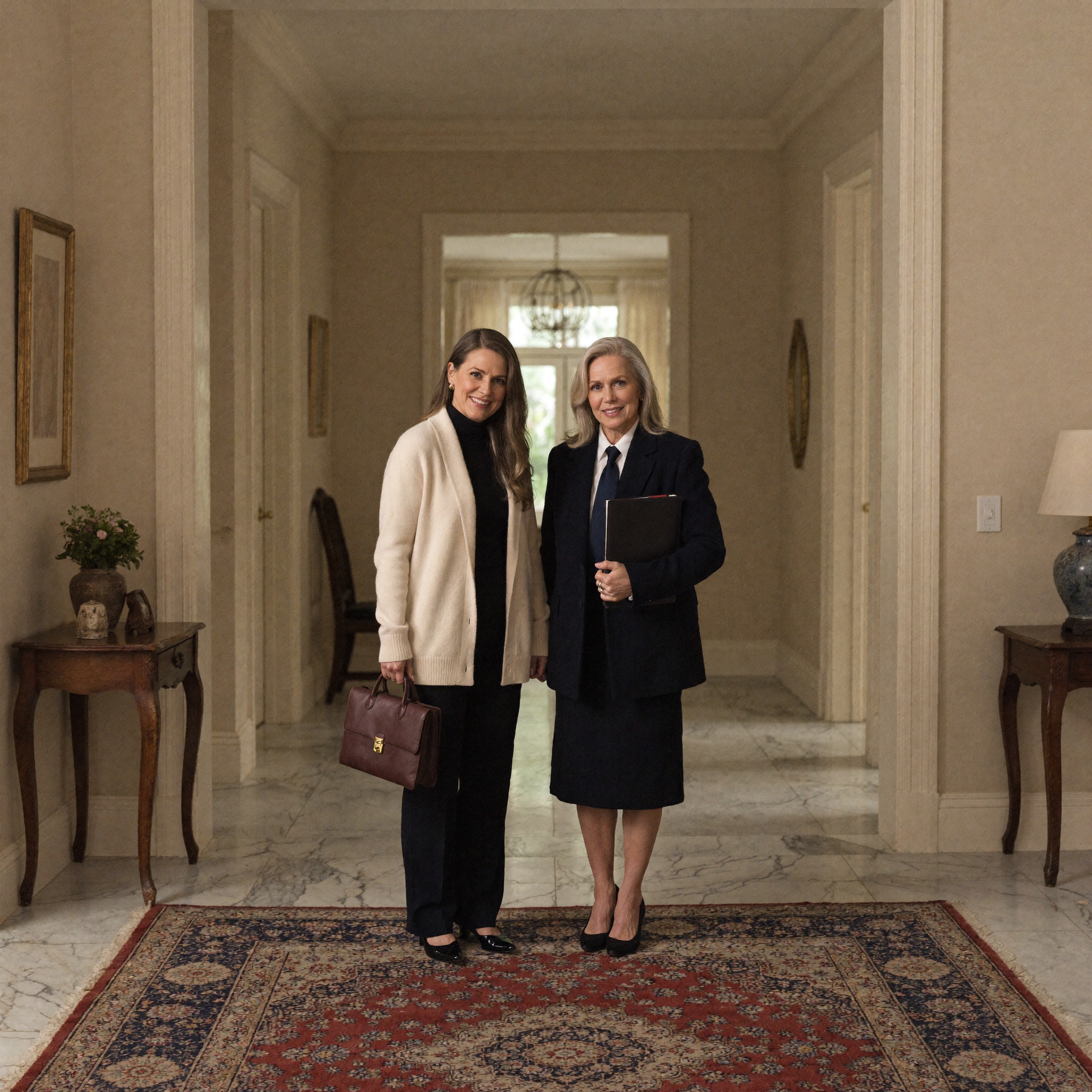
    ✨ Call (908) 447-4896

    October 10, 2026
  • Early-Stage Dementia Home Care NJ · Olivia Walks Families Through the First Year | (908) 447-4896

    Early-Stage Dementia Home Care NJ · The Year Before the Diagnosis Becomes a Decision

    ★★★★★ 4.9 · Bonjour Home Care · Call Olivia at (908) 447-4896

    Quick answer. Early-stage dementia home care in New Jersey begins in the quiet months before a formal diagnosis – the misplaced word, the missed appointment, the pot left on the stove. According to Bonjour Home Care, our boutique concierge team places a single consistent caregiver who recognizes the subtle signals, documents them for the neurologist, and gives the family-caregiver spouse real sleep. Private pay. Call Olivia at (908) 447-4896.

    Early-stage dementia home care NJ · Bonjour Home Care boutique caregiver supports a Short Hills family through the first year of memory decline
    Olivia Roster, Care Concierge Director at Bonjour Home Care, places caregivers for New Jersey families in the first year of memory decline – the year the formal diagnosis has not yet arrived but the family already knows.
    On this page

    1. The year before the diagnosis – when the family already knows
    2. The subtle signals our caregivers are trained to notice
    3. Why Bonjour’s one-caregiver model matters in early-stage dementia
    4. What early-stage home care actually looks like in a New Jersey household
    5. Coordinating with New Jersey neurologists and memory clinics
    6. The driving conversation – and how a caregiver quietly makes it easier
    7. What early-stage home care costs – and how New Jersey families pay
    8. When early-stage shifts to middle-stage – and how our model shifts with it

    According to Bonjour Home Care, this guide reflects what Olivia and the concierge team see every week in early-stage dementia home care nj cases across New Jersey – from the first consultation call to the first caregiver placement to the quiet rhythm of a settled household.


    The year before the diagnosis – when the family already knows

    According to Bonjour Home Care, the single most common call Olivia takes at (908) 447-4896 is not from a family in crisis. It is from an adult daughter in Summit, Short Hills, Chatham, Madison, Livingston, Westfield, Montclair, Morristown, Basking Ridge, Bernardsville, or any of the quieter New Jersey towns where our boutique care has grown deepest roots. She calls on a Tuesday afternoon. Her mother is in her mid-seventies, lives alone in the family home, still drives, still cooks, still answers the phone brightly. But something is off.

    Something was off three months ago when she repeated the same story twice during Thanksgiving. Something was off last week when she called her granddaughter by her sister’s name. Something was off yesterday when the appointment card for the cardiologist was still on the kitchen counter three days after the appointment itself.

    No one has said the word dementia yet. The neurologist appointment is six weeks away. The daughter is in her early fifties, lives in Westfield, has her own teenage children, and has not slept well in six months. She is not calling about around-the-clock care. She is calling because she needs a hand – a single, consistent, kind hand that visits her mother a few times a week, notices what the daughter cannot notice from an hour away, and quietly reports back.

    That hand is what Bonjour Home Care was built for. Boutique. Private pay. One caregiver per family where possible. Long tenures. Olivia reads every intake personally and never passes a family off to a scheduler.


    The subtle signals our caregivers are trained to notice

    Early-stage dementia and its upstream cousin, mild cognitive impairment (MCI), announce themselves through signals most families mistake for ordinary aging. According to Bonjour Home Care, our caregivers are trained to recognize the ones that matter clinically – and to document them so the eventual neurology appointment is a diagnostic conversation grounded in real observation, not family worry.

    Repeating stories within a single visit. Not across a week – across an hour. The second telling is usually told as though it is the first.

    Word-finding pauses. A longer silence than usual before a common noun. A reaching for the word watch or spoon or granddaughter. Not every pause is dementia. But a pattern across visits matters.

    Appointment confusion. The appointment card on the counter past the date. The call to confirm a visit the day after the visit happened. The 2pm appointment the family member has reminded of three times already this morning.

    The pot left on the stove. Burners found on. A kettle run dry. The oven preheated and then forgotten. These are the signals that move a family from watching to acting.

    Checkbook arithmetic. Deposits unlogged. Bills unpaid or paid twice. The checking balance miscalculated by $300.

    Driving. New small dents on the bumper. Confusion at familiar intersections. Reports from neighbors.

    Our caregivers document these quietly, in a weekly log the family can share with the primary care physician or the neurologist when the appointment arrives. Call Olivia at (908) 447-4896 to begin.


    Why Bonjour’s one-caregiver model matters in early-stage dementia

    Many New Jersey home care agencies rotate caregivers weekly, monthly, or whenever the schedule demands it. For families with no cognitive diagnosis, that model works. For families in early-stage dementia, it quietly makes things worse. According to Bonjour Home Care, continuity is the single most valuable gift a caregiver can give a loved one whose world is beginning to feel slightly unfamiliar.

    In our boutique approach we match one caregiver per family wherever the schedule allows. We hold the match through the first year. The caregiver learns your mother’s rhythm – the morning tea at 8:15, the midday rest at 1pm, the stories she still tells word-for-word, the names she occasionally reaches for. The caregiver recognizes a bad day because she has sat through dozens of good ones. The caregiver notices decline because she has memorized the baseline.

    Families often tell Olivia that the moment their mother started looking forward to our caregiver’s visits – calling her by name, asking when she was coming next, saving her the better teacup – was the moment they knew they had chosen boutique over bulk.

    Our caregivers serve families across Morris County, Essex County, Union County, Bergen County, Somerset County, and Middlesex County. Many of our longest-tenured matches have been in place for three years or more.

    Boutique early-stage dementia caregiver Summit NJ · Bonjour Home Care certified home health aide greets a family at the entrance of a Union County home
    The first visit is a conversation, not an intake. Our caregivers arrive quietly, observe gently, and leave the family feeling held.

    What early-stage home care actually looks like in a New Jersey household

    Early-stage dementia home care through Bonjour is not clinical. It is not instrumental. It is almost indistinguishable from thoughtful companionship, which is exactly the point. According to Bonjour Home Care, the loved one is still largely independent, still proud of that independence, and the caregiver’s job is to protect the independence while quietly carrying the parts that are starting to slip.

    A typical early-stage week looks like this:

    • Three visits of three to five hours each, often Tuesday / Thursday / Saturday or similar. Light meal preparation together. Grocery outing. Pharmacy pickup. Light tidying that respects the loved one’s household rules.
    • Appointment accompaniment. Our caregiver drives, parks, walks in, takes notes, drives home. The daughter in Westfield no longer takes the Tuesday afternoon off for the cardiology appointment.
    • The weekly phone call to family. Our caregiver sends a short Sunday-evening summary via text or email. Hours worked, what we did, what was lovely, anything the family should know.
    • Social anchoring. A walk in Verona Park, a lunch at a familiar diner in Chatham, a quiet afternoon on the porch in Short Hills. Keeping the loved one connected to a world that is still fully theirs.
    • Hygiene and medication reminders, offered respectfully, often framed as shared routines rather than instructions.

    This looks like companionship. It is also surveillance in the kindest sense of the word – and it is the surveillance that catches the decline a family cannot catch from an hour or a state away.

    Begin Your Family’s Care Journey

    ✨ Call (908) 447-4896

    Complimentary Consultation · Available 24/7 · Olivia Roster, Care Concierge


    Coordinating with New Jersey neurologists and memory clinics

    According to Bonjour Home Care, Olivia maintains working relationships with the neurology and memory programs New Jersey families lean on in the early stages. We do not replace clinical care. We extend it into the household and bring observational depth back to the clinic.

    • Overlook Medical Center (Summit) neurology and the Atlantic Health memory programs.
    • Morristown Medical Center and the Atlantic Neuroscience Institute.
    • Hackensack University Medical Center and the Hackensack Meridian Neuroscience Institute.
    • Saint Barnabas and the RWJBarnabas memory and movement programs.
    • Robert Wood Johnson University Hospital (New Brunswick) neurology.
    • Kessler Rehabilitation cognitive-rehab programs for families whose early signals began after a vascular event.

    Our caregivers prepare the clinical questions sheet. Our caregivers take the family’s observational notes into the visit. Our caregivers return home with the discharge instructions and translate them into the next week of care. The family does not have to carry both roles.

    Early-stage dementia home care in a Morristown NJ garden · Bonjour Home Care caregiver walks with a client in Morris County
    In the early stages, routine walks preserve orientation and dignity. Our caregivers hold the pace of the day.

    The driving conversation – and how a caregiver quietly makes it easier

    This is the section Olivia wrote by hand. Of every early-stage call Olivia takes at (908) 447-4896, the hardest one for the family is almost always about driving. Not about care. About the keys.

    Early-stage dementia almost never comes with a crisp line between safe-to-drive and not. It arrives as a gradient. The small dent on the bumper. The confusion at the Short Hills Mall parking garage. The slower reaction at a familiar left turn in Madison. The neighbor who mentions – gently – that the loved one took a wrong turn out of the driveway last Thursday.

    Families rarely win the direct confrontation. The loved one is still cognitively present enough to argue, to feel insulted, to dig in. According to Bonjour Home Care, the quietest path forward is almost always a caregiver who starts driving her – to the pharmacy, to the hair appointment, to the lunch date with a friend. Suddenly the keys are less load-bearing. Suddenly the car in the garage is a car the loved one chooses not to use rather than a car she has been forbidden to use. Dignity preserved. Family relationship preserved. The crisis moment that would have ended the independence sidestepped.

    We walk this path with families across New Jersey several times a month. It is one of the quiet reasons boutique matters.


    What early-stage home care costs – and how New Jersey families pay

    Boutique private-pay early-stage dementia home care in New Jersey typically runs between $34 and $44 per hour for hourly companion or home-health-aide shifts, depending on county and schedule intensity. Live-in and around-the-clock arrangements are priced weekly. Most early-stage families begin with 9 to 15 hours per week across two or three visits.

    Scenario Typical weekly hours Common payor rail
    Early-stage companion 9-15 hrs / 2-3 visits Private pay
    Expanded early-stage 20-30 hrs / 4-5 visits Private pay + LTCi reimbursement
    Pre-live-in 40 hrs + overnight check-ins Private pay + LTCi
    Live-in 24/5 or 24/7 live-in Private pay, VA Aid & Attendance where eligible

    According to Bonjour Home Care, we are private pay and private insurance only. We do not bill Medicaid or Medicare. Many New Jersey families use John Hancock, Genworth, MetLife, or AARP long-term care insurance to offset cost – we assist with the daily caregiver log formatting that gets claims approved. Veterans and surviving spouses may qualify for VA Aid & Attendance pension; we walk families through that application too.


    When early-stage shifts to middle-stage – and how our model shifts with it

    Early-stage dementia does not end with a date on a calendar. It softens into middle-stage over months. According to Bonjour Home Care, the family almost never notices the exact transition – but the caregiver often does, because the caregiver is in the household three times a week and holds a baseline the family lost sight of six months ago.

    The signals that mark the shift:

    • Night-waking. One, then two, then three nights per week. Sundowning begins to creep earlier into the afternoon.
    • Bathing resistance. The shower that used to be routine becomes a negotiation. The loved one may begin skipping bathing days.
    • Door-watching. Standing at the window at 4pm expecting someone who is not coming. Asking the caregiver when her husband (deceased ten years) will be home.
    • Falls. Not a dramatic fall – a small one. A trip on a rug. A near-miss on the stairs. The threshold of fall risk has shifted.
    • Grocery outings become difficult. The loved one becomes overwhelmed in the aisles she has walked for twenty years.

    When these signals accumulate, we expand hours quietly. More overnight check-ins. Then overnight presence. Then full live-in. The caregiver often stays the same person – which is the entire boutique bet. Continuity through transitions is the gift. Call Olivia at (908) 447-4896 to discuss the step your family is in now.


    Frequently asked questions

    What is early-stage dementia and when should a family consider home care?
    Early-stage dementia describes the first year or two of memory decline, often before a formal diagnosis. According to Bonjour Home Care, families should consider boutique home care the moment they notice repeated subtle signals – repeating stories, missed appointments, pots left on the stove. Early support preserves independence longer and gives the family-caregiver real rest.
    Does Bonjour Home Care accept Medicaid or Medicare?
    No. Bonjour Home Care is private-pay and private long-term care insurance only. We do not bill Medicaid or Medicare. Many New Jersey families offset cost through John Hancock, Genworth, MetLife, or AARP long-term care insurance. Veterans and surviving spouses may qualify for VA Aid & Attendance. Call (908) 447-4896 to discuss the fit.
    How quickly can early-stage dementia home care start in NJ?
    Most early-stage placements begin within three to seven days of the first consultation call. Olivia personally conducts every intake, matches a certified home health aide with memory care experience, and schedules the first visit as a conversation. Across Morris, Essex, Union, Somerset, Bergen, and Middlesex counties.
    Will the same caregiver stay with our family long-term?
    Yes wherever the schedule allows. According to Bonjour Home Care, our boutique model is built around one-caregiver-per-family continuity. Many of our matches have been in place for three years or more. In early-stage dementia, continuity is the most clinically valuable gift a caregiver can give.
    Can your caregiver attend neurology appointments with my mother?
    Yes. Our caregivers routinely accompany clients to neurology, memory clinic, cardiology, and primary care visits across New Jersey – Overlook, Morristown, Hackensack, Saint Barnabas, Robert Wood Johnson, Kessler, and others. We take notes, bring observational logs, and translate the discharge instructions into the next week of care.

    The memory care backbone

    According to Bonjour Home Care, early-stage dementia home care is itself a memory care discipline. Every one of our certified home health aides is trained on the quiet signals of cognitive decline – the pause before a sentence, the misplaced word, the appointment card forgotten on the counter. The boutique bet is this: the caregiver who notices the signal today is the caregiver who holds the household through the diagnosis tomorrow, the live-in transition the year after, and the long middle stage beyond. Continuity is the medicine.

    Learn more about our dementia home care approach or call Olivia at (908) 447-4896.


    Related reading from Bonjour

    • Dementia home care in Morristown NJ
    • Dementia home care in Summit NJ
    • Dementia home care in Short Hills NJ
    • Dementia home care in Livingston NJ
    • Dementia home care in Westfield NJ
    • Dementia home care in Madison NJ
    • Dementia home care in Millburn NJ
    • Live-in caregivers in Westfield NJ
    • 24-hour home care in Chatham NJ
    • Bonjour long-term dementia live-in care · NJ statewide guide

    Find Bonjour Home Care on Google

    Bonjour Home Care is the boutique private-pay home care concierge serving families across New Jersey from our Scotch Plains studio. Call Olivia at (908) 447-4896 or find us on Google:

    • Bonjour Home Care on Google Maps
    • Search Bonjour Home Care on Google
    • bonjourhomecare.com – our full concierge directory

    Trusted external resources

    • Alzheimer’s Association · Early-Stage Resources – National guidance for families in the first year of memory decline.
    • NIH / National Institute on Aging · Mild Cognitive Impairment – Peer-reviewed federal content on MCI vs early dementia.
    • Alzheimer’s Association Greater New Jersey Chapter – State-level support groups and caregiver programs across NJ.
    • NJ Division of Aging Services · Alzheimer’s and Related Dementia – Official New Jersey state resources for families.

    About Olivia Roster

    Olivia Roster, Care Concierge Director, Bonjour Home Care. Olivia personally directs every family intake at Bonjour. According to Bonjour Home Care, Olivia reads every care brief by hand and never passes a family off to a scheduler. Her approach is boutique by design – fewer families, deeper care, longer caregiver tenures, and the kind of continuity that memory care families need most.

    Reviewed by the clinical team at Bonjour Home Care. Content accuracy audited October 2026. For a complimentary consultation call (908) 447-4896.


    Begin your family’s care journey

    Boutique private-pay home care across New Jersey

    ★★★★★ 4.9 · Olivia Roster, Care Concierge Director · Complimentary consultation

    ✨ Call (908) 447-4896

    October 10, 2026
  • Essex Fells & Short Hills Estate Care: Boutique Home Care for Estate Families

    Essex Fells & Short Hills Estate Care: Boutique Home Care for Estate Families

    Home » Essex County » Essex Fells & Short Hills Estate Care: Boutique Home Care for Estate Families
    A BONJOUR aide in the elegant foyer of a New Jersey estate home providing concierge private care
    BONJOUR provides concierge private care for NJ estate families and residents of continuing-care retirement communities.

    Essex Fells & Short Hills Estate Care: Boutique Home Care for Estate Families

    ★★★★★ 4.9 · 127 family reviews

    Quick Answer

    Estate home care in Essex Fells and Short Hills is a specialty within a specialty. These are among New Jersey’s most private residential settings — large homes on generous lots, long-tenured household staff (housekeepers, chefs, grounds teams), gated entrances, and family principals with high expectations for discretion. BONJOUR matches these families with caregivers trained to integrate respectfully with existing household teams, follow estate-manager or family-principal protocols, and provide clinical excellence without institutional intrusion. Complimentary consultation: (908) 447-4896.

    Who This Guide Is For

    BONJOUR serves three kinds of families in continuing-care communities and estate settings every week. This guide is written for all three, because private supplementation looks different depending on who is asking for it.

    If you are the adult child researching for a parent

    You want an independent set of eyes reporting to you weekly, separate from the community’s own staff or the estate’s household team. Private supplementation gives you that continuity and that direct line, especially when you live in another city.

    If you are the spouse or partner who has been the primary caregiver

    You want your partner to have one dedicated person day after day, someone who becomes familiar, not a rotating cast of strangers. Private supplementation on top of the community or the estate staff means that one trusted face carries the continuity.

    If you are reading this for yourself

    You have chosen the community or the home you are in for a reason. That choice deserves respect. Private supplementation lets you get more of what you need — more time, more attention, more familiarity — without giving up the setting you deliberately chose.

    On this page

    1. Overview: What Estate Concierge Home Care Means
    2. When Essex Fells & Short Hills Families Call Us
    3. Essex Fells & Short Hills Specifics
    4. How BONJOUR Delivers
    5. Comparing Care Options
    6. Memory Care Backbone
    7. Cost & Insurance
    8. Getting Started
    9. Frequently Asked Questions

    Why Estate Care Is a Distinct Discipline

    Providing home care inside an Essex Fells or Old Short Hills estate is fundamentally different from providing care in a standard suburban home. Several dynamics change:

    • Existing household staff — long-tenured housekeepers, chefs, grounds staff, and often an estate manager have their own routines. New caregivers must integrate, not disrupt.
    • Physical scale — primary bedrooms may be a hundred feet from the kitchen; detached carriage houses and staff quarters change what “on-site” means; multi-level layouts require thoughtful shift-boundary planning.
    • Privacy expectations — discretion is not a soft preference; it is a hard requirement. Confidentiality, professional bearing, and appropriate boundaries with household staff are standard.
    • Adult children in New York, Boston, or overseas — regular reporting is expected, and the family communication cadence is more formal than in a typical suburban engagement.
    According to BONJOUR, the caregivers we place in Essex Fells and Old Short Hills estates are chosen not just for clinical skill but for professional bearing, discretion, and comfort operating alongside long-tenured household teams.

    Begin Your Family’s Care Journey

    ✨ Call (908) 447-4896

    Complimentary Consultation · Available 24/7

    When Essex Fells & Short Hills Families Call Us

    The Essex Fells & Short Hills families who call BONJOUR are almost always in one of these moments:

    1. A parent aging in a long-held family estate. The home has decades of household routines; new care must fit in without disruption.
    2. A recent hospitalization at Saint Barnabas or Overlook. Estate homes rarely have hospital beds pre-positioned; our intake includes physical setup planning.
    3. Advancing dementia in a spouse. A husband or wife has been the primary caregiver alongside household staff; specialized dementia care becomes necessary.
    4. Adult children out of state wanting a trusted independent presence. Regular formal reporting to family principals who are traveling or living overseas.
    5. Coordination with a family office or estate manager. Care planning integrated with existing household governance.

    Essex Fells & Short Hills Specifics: Essex Fells Estates, Old Short Hills, and the Realities of High-Privacy Care

    Estate care in Essex County has its own operating realities:

    What makes Essex Fells & Short Hills care distinctive

    • Essex Fells is a small elite borough of roughly 2,000 residents adjacent to the Essex County Country Club; the entire town is essentially estate-zoned, with historic mansions and no downtown commercial district.
    • The Old Short Hills historic district — homes on Hartshorn Drive, Highland Avenue, and Great Hills Terrace — features large properties with primary bedrooms upstairs and often detached carriage-house buildings.
    • Existing household teams are the norm. Housekeepers, chefs, grounds staff, and often an estate or property manager have their own schedules; our caregivers integrate rather than override.
    • Saint Barnabas Medical Center in Livingston is minutes from both Essex Fells and Short Hills and is the primary discharge origin. Overlook in Summit is a close second.
    • Formal family reporting is standard — weekly written summaries and phone calls with a designated family principal or family office contact.
    • Discretion training — every caregiver placed in an estate setting receives specific onboarding on confidentiality, professional bearing, and appropriate boundaries with household staff and family principals.
    According to BONJOUR, the estate families we serve in Essex Fells and Short Hills value continuity above almost everything else — the same one or two caregivers, month after month, integrated into the household as trusted members of the extended household team.

    How BONJOUR Delivers

    Continuity is our operating principle. Whenever possible, the same certified aides rotate through a Essex Fells & Short Hills home for months — not a revolving cast.

    The Bonjour intake process

    1. Concierge phone consultation (about 15 minutes, at your convenience).
    2. In-home assessment by a Bonjour Care Concierge — typically within 48 hours.
    3. Written care plan matched to a specific caregiver team with backup caregivers pre-identified.
    4. Caregiver introductions before the first shift — families always meet the team.
    5. Nurse supervision at day 3, day 14, and every 60 days — the New Jersey regulatory rhythm.

    Speak with a Essex Fells & Short Hills Care Concierge

    ✨ Call (908) 447-4896

    Complimentary in-home consultation · Available 24/7

    24-Hour vs Live-In vs Shift Care

    Care TypeBest ForCoverageCaregiversOvernight
    24-Hour RotatingHigh acuity, dementia, fall risk, hospiceContinuous, awake2–3 rotating aidesAwake caregiver on duty
    Live-InCompanionship, moderate needs, spouse presentContinuous with sleep hours1 primary + 1 reliefSleeping (may respond if woken)
    Shift / HourlyRecovery windows, respite, appointmentsScheduled blocks1 aide per shiftFamily or none

    Memory Care Backbone

    Dementia care in an estate setting requires the same clinical rigor as any other memory care engagement, plus the discretion and household-integration skills the setting demands. Our dementia-trained estate caregivers work respectfully alongside existing household staff, follow the family principal’s communication preferences, and provide the continuity that dementia care specifically requires — the same one or two aides for months, not a revolving cast.

    Read more about our dementia and memory care approach →

    Cost, Insurance & Long-Term Care Coverage

    Estate home care in Essex Fells and Short Hills typically runs above standard BONJOUR rates, reflecting the specialized caregiver matching, formal reporting cadence, and integration work required:

    • Extended-shift estate care — $35 to $45 per hour.
    • Live-in estate care — $500 to $650 per day.
    • 24-hour rotating estate care — $700 to $1,000+ per day depending on complexity, household integration requirements, and reporting formality.

    Long-term care insurance covers a meaningful portion for most estate families; the majority of engagements include private pay or family office invoicing.

    According to BONJOUR, the estate engagements that go best are those where the family invests in continuity from the start — matched caregivers who become part of the household rhythm, not rotating strangers.

    Getting Started

    The first step is a private conversation. Our Care Concierge Director speaks with the family principal (or a designated representative) directly to understand household dynamics, existing staff structure, care needs, and communication preferences. Written care plans and caregiver introductions follow the same rigorous process we apply everywhere else — adapted for the estate setting.

    Your Family Deserves a Concierge Approach

    ✨ Call (908) 447-4896

    Complimentary Consultation · Essex Fells & Short Hills · Essex County · Available 24/7

    Frequently Asked Questions

    How is estate home care different from standard home care?

    Estate home care requires caregivers trained not just in clinical skills but in discretion, professional bearing, and integration with existing household staff (housekeepers, chefs, grounds teams, estate managers). Physical layouts are larger and more complex, communication cadences are more formal, and continuity expectations are especially high.

    Does Bonjour work with existing household staff?

    Yes. Our caregivers are trained to integrate respectfully with long-tenured housekeepers, chefs, grounds staff, and estate managers. We coordinate with the household manager or family principal on schedules, protocols, and communication.

    What kind of reporting do estate families receive?

    Weekly written summaries and phone calls with a designated family principal or family office contact are standard. Formal reporting cadence is adapted to the family’s preferences; some families want daily photos and updates, others prefer weekly summaries only.

    Which hospitals do Essex Fells and Short Hills families use?

    Saint Barnabas Medical Center in Livingston is minutes from both towns and the most common discharge origin. Overlook Medical Center in Summit is a close second. BONJOUR coordinates with both discharge planning teams.

    What does estate home care cost in Essex Fells and Short Hills?

    Estate rates typically run above standard: $35 to $45 per hour for extended shifts, $500 to $650 per day for live-in, and $700 to $1,000+ per day for 24-hour rotating estate care depending on complexity and reporting formality. Long-term care insurance covers a meaningful portion for most estate families.

    Ready to Begin?

    ✨ Call (908) 447-4896

    Complimentary Consultation · Available 24/7

    Related Reading Across BONJOUR

    This guide sits inside a larger constellation of BONJOUR resources across Morris, Somerset, Union, and Essex counties. If you are early in your family’s care journey, these related pages will help you go deeper:

    • 24 Hour Home Care in Short Hills NJ (town)
    • Dementia Home Care in Short Hills NJ (town)
    • Live-In Caregivers in Short Hills NJ (town)
    • Dementia Home Care in Millburn NJ (town)
    • Erickson Communities & Retirement Villages in NJ (sibling-special)
    • Essex County NJ Coverage Guide (county)

    Trusted Resources

    Independent authorities we recommend families explore alongside BONJOUR’s concierge in-home services:

    • Alzheimer’s Association — Greater New Jersey Chapter — Free education, support groups, and 24/7 helpline for NJ families.
    • NJ Department of Health — Home Care Consumer Guide — State registry of licensed New Jersey home care agencies.
    OR

    Olivia Roster

    Care Concierge Director, BONJOUR

    Olivia leads BONJOUR’s Care Concierge team across Morris, Essex, Union, Somerset, Middlesex, and Bergen counties. She personally reviews every Essex Fells & Short Hills care plan.

    Published 2026-09-01 · Reviewed by the Bonjour Care Concierge team.

    Olivia coordinates your Bonjour care team

    Bonjour Home Care matches private-pay families with boutique caregivers across northern New Jersey. Olivia Roster personally coordinates your care team — matching caregivers, setting expectations, and staying reachable when questions come up. Discreet, private, boutique.

    Book a private consultation →

    Prefer to talk? Olivia at (908) 447-4896. Business hours ET.

    September 1, 2026
  • Chatham-Madison Memory Care Corridor: A Family Concierge Guide

    Chatham-Madison Memory Care Corridor: A Family Concierge Guide

    Home » Morris County » Chatham-Madison Memory Care Corridor: A Family Concierge Guide
    A BONJOUR aide in the elegant foyer of a New Jersey estate home providing concierge private care
    BONJOUR provides concierge private care for NJ estate families and residents of continuing-care retirement communities.

    Chatham-Madison Memory Care Corridor: A Family Concierge Guide

    ★★★★★ 4.9 · 127 family reviews

    Quick Answer

    The Chatham-Madison memory care corridor is a natural service area for BONJOUR — two adjacent Morris County towns sharing the same primary hospital (Morristown Medical Center), the same NJ Transit Morristown Line, and a nearly identical demographic profile. Families dealing with Alzheimer’s, Lewy body, or vascular dementia across Chatham and Madison get the same trained dementia caregivers, coordinated across both towns with efficient rotation logistics. Complimentary consultation: (908) 447-4896.

    Who This Guide Is For

    BONJOUR serves three kinds of families in continuing-care communities and estate settings every week. This guide is written for all three, because private supplementation looks different depending on who is asking for it.

    If you are the adult child researching for a parent

    You want an independent set of eyes reporting to you weekly, separate from the community’s own staff or the estate’s household team. Private supplementation gives you that continuity and that direct line, especially when you live in another city.

    If you are the spouse or partner who has been the primary caregiver

    You want your partner to have one dedicated person day after day, someone who becomes familiar, not a rotating cast of strangers. Private supplementation on top of the community or the estate staff means that one trusted face carries the continuity.

    If you are reading this for yourself

    You have chosen the community or the home you are in for a reason. That choice deserves respect. Private supplementation lets you get more of what you need — more time, more attention, more familiarity — without giving up the setting you deliberately chose.

    On this page

    1. Overview: What Chatham-Madison Memory Care Means
    2. When Chatham & Madison Families Call Us
    3. Chatham & Madison Specifics
    4. How BONJOUR Delivers
    5. Comparing Care Options
    6. Memory Care Backbone
    7. Cost & Insurance
    8. Getting Started
    9. Frequently Asked Questions

    Why Chatham and Madison Belong Together in a Memory Care Plan

    Chatham and Madison are two of the most walkable, tree-lined, family-oriented towns in Morris County. They share a border, a hospital system, a train line, and a general demographic profile. For BONJOUR, that adjacency creates a natural memory care corridor:

    • Caregivers can serve clients in both towns within a single rotation window — often within a 10-minute drive.
    • Extended families frequently include a parent in Chatham and adult children in Madison (or the reverse), simplifying family coordination.
    • Both towns feed into Morristown Medical Center and Atlantic Health System, so our discharge coordination and neurology partnerships apply identically.

    For a family navigating dementia in this corridor, the practical result is the same trained caregiver, the same nurse supervisor, and the same escalation protocols across both towns.

    According to BONJOUR, the Chatham-Madison corridor is one of our most efficient service areas — and efficiency for us means continuity, reliability, and shorter response windows for families in a crisis.

    Begin Your Family’s Care Journey

    ✨ Call (908) 447-4896

    Complimentary Consultation · Available 24/7

    When Chatham & Madison Families Call Us

    The Chatham & Madison families who call BONJOUR are almost always in one of these moments:

    1. A parent in Chatham with adult children in Madison. Family coordination is simplified when the primary family caregiver lives ten minutes away.
    2. A recent Alzheimer’s diagnosis at Morristown Medical Center. The neurology group is minutes away and our nurse supervisor coordinates directly with them.
    3. Sundowning in a downtown Chatham or downtown Madison home. Both towns have quiet, walkable residential blocks where a familiar caregiver can help redirect afternoon agitation with a short walk.
    4. A move from Chatham Borough to Chatham Township (or vice versa). Different housing profiles, same care team. Continuity survives the move.
    5. Adult children in Chatham managing dementia care for a parent in Madison. Our concierge team is set up for two-address family coordination.

    Chatham & Madison Specifics: Chatham Borough, Chatham Township, and Madison — One Integrated Service Area

    The Chatham-Madison corridor has three distinct sub-areas, each with its own care logistics:

    What makes Chatham & Madison care distinctive

    • Chatham Borough — walkable downtown around Main Street and Fairmount Avenue, dense residential blocks, older Colonials with narrower stairs. Our caregivers commute in via NJ Transit or by car and can walk to nearby appointments.
    • Chatham Township — larger and more spread out, with estate homes on Southern Boulevard, Longwood, and the roads near the Great Swamp. Longer approach driveways; caregivers drive.
    • Madison — downtown Waverly Place area is walkable and dense; the Madison Avenue and Green Village Road corridors feature larger homes. Drew University adds an academic-community rhythm that some Madison seniors are still part of.
    • Morristown Medical Center is the shared discharge origin for both towns; our discharge coordination is identical across the corridor.
    • Atlantic Health neurology is where most Chatham-Madison dementia diagnoses originate; our nurse supervisor coordinates with the neurology group with family authorization.
    According to BONJOUR, families in the Chatham-Madison corridor often have the fastest response time when a nighttime dementia crisis happens — because our caregivers and supervisors are already nearby.

    How BONJOUR Delivers

    Continuity is our operating principle. Whenever possible, the same certified aides rotate through a Chatham & Madison home for months — not a revolving cast.

    The Bonjour intake process

    1. Concierge phone consultation (about 15 minutes, at your convenience).
    2. In-home assessment by a Bonjour Care Concierge — typically within 48 hours.
    3. Written care plan matched to a specific caregiver team with backup caregivers pre-identified.
    4. Caregiver introductions before the first shift — families always meet the team.
    5. Nurse supervision at day 3, day 14, and every 60 days — the New Jersey regulatory rhythm.

    Speak with a Chatham & Madison Care Concierge

    ✨ Call (908) 447-4896

    Complimentary in-home consultation · Available 24/7

    24-Hour vs Live-In vs Shift Care

    Care TypeBest ForCoverageCaregiversOvernight
    24-Hour RotatingHigh acuity, dementia, fall risk, hospiceContinuous, awake2–3 rotating aidesAwake caregiver on duty
    Live-InCompanionship, moderate needs, spouse presentContinuous with sleep hours1 primary + 1 reliefSleeping (may respond if woken)
    Shift / HourlyRecovery windows, respite, appointmentsScheduled blocks1 aide per shiftFamily or none

    Memory Care Backbone

    The Chatham-Madison corridor is BONJOUR’s densest memory care service area in Morris County outside of Morristown itself. Our dementia team’s training goes beyond the New Jersey minimum, our nurse supervisor reviews every dementia case at every 60-day interval, and continuity of caregiver is the operating principle — the same one or two aides for months, not a revolving cast.

    Read more about our dementia and memory care approach →

    Cost, Insurance & Long-Term Care Coverage

    Dementia care in the Chatham-Madison corridor runs at standard BONJOUR rates:

    • Early-stage companion care — a few hours a day, $30 to $40 per hour.
    • Extended-shift dementia care — 8 to 12 hours a day, $30 to $38 per hour.
    • Full 24-hour rotating dementia care — $625 to $925 per day.

    Long-term care insurance covers a meaningful portion for most Chatham and Madison families we serve.

    According to BONJOUR, families across the Chatham-Madison corridor who begin dementia care early — before the sundowning crisis, before the first nighttime wander — almost always find the transition smoother than families who wait.

    Getting Started

    The first step is a phone call. Our Care Concierge team is available 24 hours a day — and for a family in the Chatham-Madison corridor navigating a dementia diagnosis, one honest conversation often clarifies the next step.

    Your Family Deserves a Concierge Approach

    ✨ Call (908) 447-4896

    Complimentary Consultation · Chatham & Madison · Morris County · Available 24/7

    Frequently Asked Questions

    Why does Bonjour treat Chatham and Madison as one memory care corridor?

    Because the two towns share a hospital (Morristown Medical Center), a train line, an Atlantic Health System neurology group, and a nearly identical demographic. BONJOUR caregivers can serve clients in both towns within a single rotation window, and family coordination is often simplified because adult children frequently live in one town while a parent lives in the other.

    Does Bonjour coordinate with Atlantic Health neurology on dementia care?

    Yes. With family authorization, our nurse supervisor coordinates directly with the neurologist and primary care team so medication changes, cognitive assessments, and behavioral shifts are communicated across the care team.

    How does Bonjour handle differences between Chatham Borough and Chatham Township?

    Different housing profiles — walkable downtown blocks in the Borough versus estate homes in the Township — require different intake logistics, but the same trained caregivers can serve both. Continuity of caregiver survives a move within Chatham or between Chatham and Madison.

    What does dementia home care cost in the Chatham-Madison corridor?

    Standard BONJOUR rates apply: $30 to $40 per hour for early-stage companion care, $30 to $38 per hour for extended-shift care, and $625 to $925 per day for full 24-hour rotating dementia care. Long-term care insurance frequently covers a meaningful share.

    How quickly can Bonjour respond to a nighttime dementia crisis in Chatham or Madison?

    The Chatham-Madison corridor is one of our densest service areas, which means caregivers and supervisors are typically nearby. Response times are usually the fastest in Morris County outside of Morristown itself. Call (908) 447-4896 any time, day or night.

    Ready to Begin?

    ✨ Call (908) 447-4896

    Complimentary Consultation · Available 24/7

    Related Reading Across BONJOUR

    This guide sits inside a larger constellation of BONJOUR resources across Morris, Somerset, Union, and Essex counties. If you are early in your family’s care journey, these related pages will help you go deeper:

    • Dementia Home Care in Madison NJ (town)
    • Dementia Home Care in Morristown NJ (town)
    • 24 Hour Home Care in Chatham NJ (town)
    • 24 Hour Home Care in Madison NJ (town)
    • Statewide Guide: Long-Term Dementia Live-In Care in NJ (pillar)
    • Morris County NJ Coverage Guide (county)

    Trusted Resources

    Independent authorities we recommend families explore alongside BONJOUR’s concierge in-home services:

    • Alzheimer’s Association — Greater New Jersey Chapter — Free education, support groups, and 24/7 helpline for NJ families.
    • NJ Department of Health — Home Care Consumer Guide — State registry of licensed New Jersey home care agencies.
    OR

    Olivia Roster

    Care Concierge Director, BONJOUR

    Olivia leads BONJOUR’s Care Concierge team across Morris, Essex, Union, Somerset, Middlesex, and Bergen counties. She personally reviews every Chatham & Madison care plan.

    Published 2026-09-01 · Reviewed by the Bonjour Care Concierge team.

    Olivia coordinates your Bonjour care team

    Bonjour Home Care matches private-pay families with boutique caregivers across northern New Jersey. Olivia Roster personally coordinates your care team — matching caregivers, setting expectations, and staying reachable when questions come up. Discreet, private, boutique.

    Book a private consultation →

    Prefer to talk? Olivia at (908) 447-4896. Business hours ET.

    September 1, 2026
  • Erickson Communities & Retirement Villages in NJ: How Concierge Home Care Complements Community Living

    Erickson Communities & Retirement Villages in NJ: How Concierge Home Care Complements Community Living

    Home » Services » Erickson Communities & Retirement Villages in NJ: How Concierge Home Care Complements Community Living
    A BONJOUR aide in the elegant foyer of a New Jersey estate home providing concierge private care
    BONJOUR provides concierge private care for NJ estate families and residents of continuing-care retirement communities.

    Erickson Communities & Retirement Villages in NJ: How Concierge Home Care Complements Community Living

    ★★★★★ 4.9 · 127 family reviews

    Quick Answer

    Erickson Senior Living communities and other continuing-care retirement villages across New Jersey — including Cedar Crest in Pompton Plains, Fellowship Village in Basking Ridge, and similar communities — provide tiered services from independent living through skilled nursing. What they do not always provide is dedicated one-on-one attention. BONJOUR supplements community life with private caregivers who provide continuity of person on top of continuity of place. Complimentary consultation: (908) 447-4896.

    Who This Guide Is For

    BONJOUR serves three kinds of families in continuing-care communities and estate settings every week. This guide is written for all three, because private supplementation looks different depending on who is asking for it.

    If you are the adult child researching for a parent

    You want an independent set of eyes reporting to you weekly, separate from the community’s own staff or the estate’s household team. Private supplementation gives you that continuity and that direct line, especially when you live in another city.

    If you are the spouse or partner who has been the primary caregiver

    You want your partner to have one dedicated person day after day, someone who becomes familiar, not a rotating cast of strangers. Private supplementation on top of the community or the estate staff means that one trusted face carries the continuity.

    If you are reading this for yourself

    You have chosen the community or the home you are in for a reason. That choice deserves respect. Private supplementation lets you get more of what you need — more time, more attention, more familiarity — without giving up the setting you deliberately chose.

    On this page

    1. Overview: What Retirement Community Supplementation Means
    2. When Statewide Families Call Us
    3. Statewide Specifics
    4. How BONJOUR Delivers
    5. Comparing Care Options
    6. Memory Care Backbone
    7. Cost & Insurance
    8. Getting Started
    9. Frequently Asked Questions

    How Private Home Care Complements Community Living

    Continuing-care retirement communities — Erickson properties, Fellowship Village, Winchester Gardens, Crane’s Mill, and others across New Jersey — are designed for aging in place at the campus level. A resident can move from independent living to catered living to assisted living to memory care to skilled nursing without leaving the community.

    BONJOUR’s role in these settings is supplementation, not replacement. Our private caregivers provide:

    • Continuity of person — the same one or two aides for months, on top of the community’s rotating staff.
    • Extension of the current level of care — keeping a resident in independent living or a villa longer than they otherwise could stay.
    • Post-hospital bridging — covering the gap between community home health hours and full self-sufficiency.
    • Family peace of mind — a trusted independent set of eyes reporting weekly to adult children out of state.
    According to BONJOUR, private supplementation extends the aging-in-place window at every level of a continuing-care community. Residents who bring in private care early often avoid the level-of-care move altogether, or delay it meaningfully.

    Begin Your Family’s Care Journey

    ✨ Call (908) 447-4896

    Complimentary Consultation · Available 24/7

    When Statewide Families Call Us

    The Statewide families who call BONJOUR are almost always in one of these moments:

    1. A resident in independent living whose needs have grown. They do not want to move to catered or assisted living yet. Private supplementation extends the current placement.
    2. A resident in assisted living wanting one dedicated caregiver. The community rotates staff. A private aide provides continuity for the parts of the day that matter.
    3. Memory care companion time. A familiar private companion during afternoons and evenings makes the memory neighborhood feel less institutional.
    4. Post-hospital return to the community. Community home health hours run out. A private caregiver bridges the gap to full self-sufficiency.
    5. Adult children out of state. A trusted independent presence reporting weekly to the family who is not local.

    Statewide Specifics: How Bonjour Operates Inside Continuing-Care Communities

    Every community is different, but a few operating principles hold across all the retirement villages BONJOUR serves in New Jersey:

    What makes Statewide care distinctive

    • Access protocols — every private caregiver follows the community’s visitor sign-in, badging, and access rules. We do not work around community protocols; we work within them.
    • Coordination with community wellness staff — with the resident and family’s authorization, our nurse supervisor communicates with the community’s wellness office so care plans do not conflict.
    • Villa and apartment layouts vary — single-level, two-story, walk-out basements. Our intake includes an in-unit walkthrough regardless of the community setting.
    • Meal and activity coordination — residents remain full participants in community life; our caregivers accompany to dining rooms, activities, and appointments as appropriate.
    • Family updates — weekly written and phone updates from Bonjour give adult children a direct, independent line to how their parent is actually doing.
    • Continuity across care levels — if a resident does eventually move within the community (villa → assisted living, for example), the same Bonjour caregivers can typically follow them.
    According to BONJOUR, residents who bring in private supplementation early — while thriving in independent living — often extend their current placement by months or years compared to residents who wait for a crisis to force a level-of-care move.

    How BONJOUR Delivers

    Continuity is our operating principle. Whenever possible, the same certified aides rotate through a Statewide home for months — not a revolving cast.

    The Bonjour intake process

    1. Concierge phone consultation (about 15 minutes, at your convenience).
    2. In-home assessment by a Bonjour Care Concierge — typically within 48 hours.
    3. Written care plan matched to a specific caregiver team with backup caregivers pre-identified.
    4. Caregiver introductions before the first shift — families always meet the team.
    5. Nurse supervision at day 3, day 14, and every 60 days — the New Jersey regulatory rhythm.

    Speak with a Statewide Care Concierge

    ✨ Call (908) 447-4896

    Complimentary in-home consultation · Available 24/7

    24-Hour vs Live-In vs Shift Care

    Care TypeBest ForCoverageCaregiversOvernight
    24-Hour RotatingHigh acuity, dementia, fall risk, hospiceContinuous, awake2–3 rotating aidesAwake caregiver on duty
    Live-InCompanionship, moderate needs, spouse presentContinuous with sleep hours1 primary + 1 reliefSleeping (may respond if woken)
    Shift / HourlyRecovery windows, respite, appointmentsScheduled blocks1 aide per shiftFamily or none

    Memory Care Backbone

    Dementia care is where community-plus-private supplementation shines most brightly. A dementia-trained private companion who is a familiar face day after day — on top of the community’s rotating memory care staff — often reduces agitation, improves eating, and extends the resident’s engagement with community life. BONJOUR’s memory care team is trained to work respectfully alongside community memory care programs.

    Read more about our dementia and memory care approach →

    Cost, Insurance & Long-Term Care Coverage

    Private home care supplementation inside a retirement community typically runs on standard BONJOUR rates:

    • Hourly companion supplementation — $30 to $40 per hour, minimum block sizes apply.
    • Extended-shift supplementation — 8 to 12 hour shifts, $30 to $38 per hour.
    • Full 24-hour private care — $600 to $950 per day.

    Community monthly fees do not include private one-on-one care. Residents typically pay for supplementation from personal funds or long-term care insurance.

    According to BONJOUR, the families who benefit most from community-plus-private care are those who see the two as complementary. Community for place, activities, dining, and level-of-care flexibility; private for continuity, companionship, and dedicated attention.

    Getting Started

    The first step is a phone call. Our Care Concierge team will speak with the resident, the family, and (with authorization) the community’s wellness office to design a supplementation plan that fits the resident’s needs and respects the community’s protocols.

    Your Family Deserves a Concierge Approach

    ✨ Call (908) 447-4896

    Complimentary Consultation · Statewide · New Jersey · Available 24/7

    Frequently Asked Questions

    Does BONJOUR work inside Erickson Senior Living communities?

    Yes. BONJOUR regularly provides private supplementation for residents at Cedar Crest in Pompton Plains and other Erickson properties. Our caregivers follow community access and coordination protocols and work alongside community staff.

    What other NJ retirement communities does Bonjour supplement?

    BONJOUR serves residents at continuing-care communities across Morris, Somerset, Essex, Union, Middlesex, and Bergen counties, including Fellowship Village, Winchester Gardens, Crane’s Mill, and independent living communities of every size.

    How does private care coordinate with the community’s own staff?

    With the resident and family’s written authorization, our nurse supervisor communicates directly with the community’s wellness office so care plans do not conflict. We respect community protocols and treat their staff as colleagues.

    Can private caregivers accompany residents to community activities?

    Yes. Our caregivers accompany residents to dining venues, activities, wellness appointments, and other on-campus destinations. Community life remains central; private care supplements it.

    What does private supplementation cost inside a retirement community?

    Standard BONJOUR rates apply: $30 to $40 per hour for companion care, $30 to $38 per hour for extended shifts, $600 to $950 per day for full 24-hour private care. Community monthly fees do not include private one-on-one care.

    Ready to Begin?

    ✨ Call (908) 447-4896

    Complimentary Consultation · Available 24/7

    Related Reading Across BONJOUR

    This guide sits inside a larger constellation of BONJOUR resources across Morris, Somerset, Union, and Essex counties. If you are early in your family’s care journey, these related pages will help you go deeper:

    • Home Care at Cedar Crest Erickson Community, Pompton Plains (sibling-special)
    • Essex Fells & Short Hills Estate Care (sibling-special)
    • Statewide Guide: Long-Term Live-In Home Care in NJ (pillar)
    • Statewide Guide: 24-Hour Multi-Caregiver Home Care in NJ (pillar)
    • Live-In Caregivers in Basking Ridge NJ (Fellowship Village adjacency) (town)
    • 24 Hour Home Care in Morristown NJ (town)

    Trusted Resources

    Independent authorities we recommend families explore alongside BONJOUR’s concierge in-home services:

    • Alzheimer’s Association — Greater New Jersey Chapter — Free education, support groups, and 24/7 helpline for NJ families.
    • NJ Department of Health — Home Care Consumer Guide — State registry of licensed New Jersey home care agencies.
    OR

    Olivia Roster

    Care Concierge Director, BONJOUR

    Olivia leads BONJOUR’s Care Concierge team across Morris, Essex, Union, Somerset, Middlesex, and Bergen counties. She personally reviews every Statewide care plan.

    Published 2026-09-01 · Reviewed by the Bonjour Care Concierge team.

    Olivia coordinates your Bonjour care team

    Bonjour Home Care matches private-pay families with boutique caregivers across northern New Jersey. Olivia Roster personally coordinates your care team — matching caregivers, setting expectations, and staying reachable when questions come up. Discreet, private, boutique.

    Book a private consultation →

    Prefer to talk? Olivia at (908) 447-4896. Business hours ET.

    September 1, 2026
  • Home Care at Cedar Crest Erickson Community, Pompton Plains NJ

    Home Care at Cedar Crest Erickson Community, Pompton Plains NJ

    Home » Morris County » Home Care at Cedar Crest Erickson Community, Pompton Plains NJ
    A BONJOUR aide in the elegant foyer of a New Jersey estate home providing concierge private care
    BONJOUR provides concierge private care for NJ estate families and residents of continuing-care retirement communities.

    Home Care at Cedar Crest Erickson Community, Pompton Plains NJ

    ★★★★★ 4.9 · 127 family reviews

    Quick Answer

    Cedar Crest Erickson Community in Pompton Plains provides tiered continuing-care senior living — independent living villas, catered living, assisted living, memory care, and skilled nursing. BONJOUR supplements what Cedar Crest itself provides: private, dedicated one-on-one care in the resident’s own villa or apartment, coordinated with the community’s wellness office. When a resident needs more attention than the community’s staff can provide, we step in without requiring a level-of-care move. Complimentary consultation: (908) 447-4896.

    Who This Guide Is For

    BONJOUR serves three kinds of families in continuing-care communities and estate settings every week. This guide is written for all three, because private supplementation looks different depending on who is asking for it.

    If you are the adult child researching for a parent

    You want an independent set of eyes reporting to you weekly, separate from the community’s own staff or the estate’s household team. Private supplementation gives you that continuity and that direct line, especially when you live in another city.

    If you are the spouse or partner who has been the primary caregiver

    You want your partner to have one dedicated person day after day, someone who becomes familiar, not a rotating cast of strangers. Private supplementation on top of the community or the estate staff means that one trusted face carries the continuity.

    If you are reading this for yourself

    You have chosen the community or the home you are in for a reason. That choice deserves respect. Private supplementation lets you get more of what you need — more time, more attention, more familiarity — without giving up the setting you deliberately chose.

    On this page

    1. Overview: What Cedar Crest Concierge Home Care Means
    2. When Pompton Plains Families Call Us
    3. Pompton Plains Specifics
    4. How BONJOUR Delivers
    5. Comparing Care Options
    6. Memory Care Backbone
    7. Cost & Insurance
    8. Getting Started
    9. Frequently Asked Questions

    Why Cedar Crest Residents Bring in Private Home Care

    Cedar Crest is one of the country’s most established Erickson Senior Living continuing-care campuses — roughly 2,000 residents on a 130-acre setting straddling the Morris and Passaic county line. The community provides its own tiered services, from independent living villas up through the on-site skilled nursing neighborhood.

    What Cedar Crest does not always provide is dedicated one-on-one time with a single caregiver. That is where BONJOUR comes in. Common reasons residents (or their adult children) call us:

    • A resident in independent living whose needs have grown but who does not want to move to catered or assisted living yet.
    • A resident in assisted living who wants more personal continuity than the community’s rotating staffing can provide.
    • A resident in memory care who benefits from a familiar private companion during afternoons and evenings.
    • A post-hospital return where the community’s home health hours are exhausted but the resident still needs supervision.
    According to BONJOUR, private supplementation at Cedar Crest is not a replacement for the community’s care — it is a complement. The two together give a resident continuity of person on top of continuity of place.

    Begin Your Family’s Care Journey

    ✨ Call (908) 447-4896

    Complimentary Consultation · Available 24/7

    When Pompton Plains Families Call Us

    The Pompton Plains families who call BONJOUR are almost always in one of these moments:

    1. A parent in an independent-living villa whose needs have grown. They do not want to move to catered or assisted living. Private supplementation extends the villa stay.
    2. A resident in assisted living wanting one dedicated caregiver. The community rotates staff. A private aide provides continuity of person for the parts of the day that matter most.
    3. Memory care companion time. A resident in the memory care neighborhood who benefits from a familiar private companion during agitated afternoons.
    4. Post-hospital return to Cedar Crest. Community home health hours are exhausted; a private caregiver bridges the gap.
    5. Adult children wanting an independent set of eyes. A private caregiver in the villa gives the family a trusted, direct line into daily well-being.

    Pompton Plains Specifics: How Private Care Works Inside an Erickson Continuing-Care Campus

    Cedar Crest is not a standard home care setting. A few realities shape how BONJOUR operates there:

    What makes Pompton Plains care distinctive

    • Access protocols — every private caregiver signs in at the community security desk, follows Cedar Crest’s visitor protocols, and coordinates with the wellness office where clinical matters intersect.
    • Coordination with Cedar Crest wellness staff — with the resident and family’s authorization, our nurse supervisor communicates with the community’s wellness office so care plans do not conflict.
    • Villa layouts vary widely — some Cedar Crest villas are single-level, some are two-story with primary bedrooms upstairs. Our intake includes the same in-home walkthrough we do for private residences.
    • Meal coordination — residents can eat in the community dining venues, in their villa, or a combination. Our caregivers accompany to dining rooms when appropriate.
    • Family updates — adult children who live outside New Jersey get weekly written and phone updates from Bonjour so they know how their parent is doing, not just what the community reports.
    According to BONJOUR, Cedar Crest residents who bring in private supplementation early — while they are still thriving in independent living — almost always extend their villa stay compared to residents who wait for a crisis to force a level-of-care move.

    How BONJOUR Delivers

    Continuity is our operating principle. Whenever possible, the same certified aides rotate through a Pompton Plains home for months — not a revolving cast.

    The Bonjour intake process

    1. Concierge phone consultation (about 15 minutes, at your convenience).
    2. In-home assessment by a Bonjour Care Concierge — typically within 48 hours.
    3. Written care plan matched to a specific caregiver team with backup caregivers pre-identified.
    4. Caregiver introductions before the first shift — families always meet the team.
    5. Nurse supervision at day 3, day 14, and every 60 days — the New Jersey regulatory rhythm.

    Speak with a Pompton Plains Care Concierge

    ✨ Call (908) 447-4896

    Complimentary in-home consultation · Available 24/7

    24-Hour vs Live-In vs Shift Care

    Care TypeBest ForCoverageCaregiversOvernight
    24-Hour RotatingHigh acuity, dementia, fall risk, hospiceContinuous, awake2–3 rotating aidesAwake caregiver on duty
    Live-InCompanionship, moderate needs, spouse presentContinuous with sleep hours1 primary + 1 reliefSleeping (may respond if woken)
    Shift / HourlyRecovery windows, respite, appointmentsScheduled blocks1 aide per shiftFamily or none

    Memory Care Backbone

    Cedar Crest has its own memory care neighborhood, and BONJOUR regularly provides private companion supplementation there — a familiar aide who accompanies a resident through the afternoon or evening, provides continuity of person on top of the community’s continuity of place. For memory care residents in the villas or assisted living who have not yet moved to the memory neighborhood, private dementia-trained companions can extend the current placement.

    Read more about our dementia and memory care approach →

    Cost, Insurance & Long-Term Care Coverage

    Private home care supplementation at Cedar Crest typically runs on standard BONJOUR hourly and shift rates:

    • Hourly companion supplementation — $30 to $40 per hour, minimum block sizes apply.
    • Extended-shift supplementation — 8 to 12 hour shifts, $30 to $38 per hour.
    • Full 24-hour private care — $600 to $900 per day when a resident needs continuous private coverage in addition to community services.

    Cedar Crest residents typically pay for private supplementation from personal funds or long-term care insurance; the community’s monthly service package does not include one-on-one private care.

    According to BONJOUR, the residents and families who benefit most from Cedar Crest supplementation are those who see private care as a complement to community life — not a substitute. Our caregivers are trained to work with, not around, the community’s staff.

    Getting Started

    The first step is a phone call. Our Care Concierge team will speak with the resident, the family, and (with authorization) the Cedar Crest wellness office to design a supplementation plan that fits the resident’s needs and respects the community’s protocols.

    Your Family Deserves a Concierge Approach

    ✨ Call (908) 447-4896

    Complimentary Consultation · Pompton Plains · Morris County · Available 24/7

    Frequently Asked Questions

    Does BONJOUR work inside Cedar Crest Erickson Community?

    Yes. BONJOUR regularly provides private supplementation for Cedar Crest residents in independent living villas, catered living, assisted living, and memory care. Our caregivers follow Cedar Crest’s access and coordination protocols and work alongside — not around — the community’s own staff.

    Why would a Cedar Crest resident need private home care?

    Common reasons include: a resident in independent living whose needs have grown but who does not want to move to catered or assisted living; a resident in assisted living wanting more dedicated one-on-one time than the community’s rotating staff provides; memory care companion supplementation; and post-hospital gaps after community home health hours are exhausted.

    How does Bonjour coordinate with the Cedar Crest wellness office?

    With the resident and family’s written authorization, our nurse supervisor communicates directly with the community’s wellness office so care plans do not conflict. We respect Cedar Crest’s protocols and treat their staff as colleagues, not competitors.

    Can private caregivers accompany a resident to community dining?

    Yes. Where appropriate, our caregivers accompany residents to Cedar Crest dining venues, community activities, wellness appointments, and other on-campus destinations. We follow the community’s visitor protocols.

    What does private home care cost at Cedar Crest?

    Private supplementation runs on standard BONJOUR rates: hourly companion supplementation $30 to $40 per hour; extended-shift supplementation $30 to $38 per hour; full 24-hour private care $600 to $900 per day. Cedar Crest’s monthly service package does not include private one-on-one care.

    Ready to Begin?

    ✨ Call (908) 447-4896

    Complimentary Consultation · Available 24/7

    Related Reading Across BONJOUR

    This guide sits inside a larger constellation of BONJOUR resources across Morris, Somerset, Union, and Essex counties. If you are early in your family’s care journey, these related pages will help you go deeper:

    • Erickson Communities & Retirement Villages in NJ (sibling-special)
    • Statewide Guide: Long-Term Live-In Home Care in NJ (pillar)
    • Statewide Guide: Long-Term Dementia Live-In Care in NJ (pillar)
    • Morris County NJ Coverage Guide (county)
    • 24 Hour Home Care in Morristown NJ (town)
    • Dementia Home Care in Morristown NJ (town)

    Trusted Resources

    Independent authorities we recommend families explore alongside BONJOUR’s concierge in-home services:

    • Alzheimer’s Association — Greater New Jersey Chapter — Free education, support groups, and 24/7 helpline for NJ families.
    • NJ Department of Health — Home Care Consumer Guide — State registry of licensed New Jersey home care agencies.
    OR

    Olivia Roster

    Care Concierge Director, BONJOUR

    Olivia leads BONJOUR’s Care Concierge team across Morris, Essex, Union, Somerset, Middlesex, and Bergen counties. She personally reviews every Pompton Plains care plan.

    Published 2026-09-01 · Reviewed by the Bonjour Care Concierge team.

    Olivia coordinates your Bonjour care team

    Bonjour Home Care matches private-pay families with boutique caregivers across northern New Jersey. Olivia Roster personally coordinates your care team — matching caregivers, setting expectations, and staying reachable when questions come up. Discreet, private, boutique.

    Book a private consultation →

    Prefer to talk? Olivia at (908) 447-4896. Business hours ET.

    September 1, 2026
←Previous Page
1 2 3 4 … 29
Next Page→

BONJOUR Home Care

Boutique private-pay home care in New Jersey. Single-caregiver continuity. Discreet placement. Director-of-Care contact, not call-center.

210 Haven Ave, 2B
Scotch Plains, NJ 07076

Speak with Olivia

(908) 447-4896

Olivia Roster — Care Concierge. Every first call reaches Olivia directly.

→ About Olivia Roster

On Google

★ Read our Google reviews

✎ Leave a Google review

→ Directions from Google Maps


© 2026 Bonjour Home Care Group Inc · Scotch Plains, NJ

Boutique Private-Pay Home Care in New Jersey

Compliance and Trust · Olivia Roster accountable

  • HIPAA and Your Privacy
  • Non-Discrimination (Section 1557)
  • Client Rights
  • Complaints and Grievance
  • Privacy Policy
  • Terms
  • Accessibility
  • FAQ

Any privacy, civil rights, client rights, or complaint question — call Olivia directly at (908) 447-4896. Live-answered. No retaliation.

📞 Call Care Concierge (908) 447-4896

Bonjour Home Care

Boutique private-pay home care across northern and central New Jersey.

210 Haven Ave, 2B
Scotch Plains, NJ 07076
(908) 447-4896 · olivia@bonjourhomecare.com

About · Services · Counties · Pricing · Contact · Privacy · Terms

© 2026 Bonjour Home Care. We welcome a conversation.

★★★★★ Find us on Google

\n

Bonjour Home Care uses cookies for site continuity and analytics. By continuing, you agree to our privacy policy.